Category Archives: Health

Here we go again…

I shouldn’t complain. I am 63 years old and have been remarkably healthy and active throughout my life. Beyond occasional migraines, I was healthy for years and took some pride in filling out medical history forms that were mostly blank. Until breaking my leg at age fifty, I really had no trauma or significant surgery that I had to list. But then a couple of years ago, I awakened with a seizure and was found to have episodes of profound low heart rate that subsequently required a pacemaker placement. Test after test revealed no significant abnormality other than the low heart rate. And we thought we had that fixed.

That is, until last week. Evidently (I have no recollection), I had another seizure in my sleep. Gena called EMS and I was taken to the local hospital (in Maryland) where I had another witnessed seizure in the emergency department. After CT’s, MRI’s, EEG’s, and neurology evaluations we didn’t really find anything. Well, maybe a tiny stroke deep in the midbrain, but it hasn’t changed since an MRI in 2021. None of the common reasons for new-onset seizures were found. In medicine we call this an idiopathic seizure disorder. No known cause, just things to watch for and treatment recommendations.

I haven’t had any more seizure activity since that morning. I am diligently taking my medications every 12 hours despite nausea and a somewhat “goofy” feeling that comes with it. I’m sure I’ll hear that the “goofiness” has been present for quite some time but will let the dad jokes slide for now. Physically, I am back to riding my Peloton and trying to build my strength back up. It is amazing how quickly the endurance drops off with missing a week of exercise. I have had wonderful support from family and friends through messaging and calls. It hasn’t hurt that we are seeing the grandsons on most days and they tend to improve my spirits.

What I didn’t count on was the emotional burden this would bring. I’ll be able to get around not being able to drive. I have recently retired friends and Gena to be sure I get where I need to be. I don’t really have many places to go and can limit my schedule quite a bit. Gena reminds me that if Mickey Haller (the Lincoln Lawyer) can do it, so can I. Getting around isn’t the issue as much as the realization that I have a couple of chronic illnesses. For years, taking care of patients with heart issues or seizure disorders was straight-forward with an evidence-based treatment plan. I didn’t spend as much time thinking through the lifestyle changes each one of these issues brought on.

Hopefully I will use this time to reflect and refocus my goals and priorities. I will try to enjoy the time with friends and family as well as work on reading and creating more than consuming knowledge. I appreciate all of the prayers and asked for continued prayer and support for Gena. I suspect I will begin to drive her crazy fairly quickly.

Limited Life Support

My answer to a question about why we don’t expose everyone so we develop immunity faster.

Let’s say a small community hospital has an ICU with 10 beds with ventilators available. Also, let’s assume the average ventilator/life support required for a COVID-19 patient is 5-7 days. This means about 500 patients a year can be “saved” or supported during the course of the year. Now let’s suppose that all 500 patients come in during te first week. We can still only care for 10, meaning 490 will die. This is why “flattening the curve” is important. It allows for staggered exposure and increased ability to care for those who are sickest over time. It takes a while for personal and “herd” immunity to develop.

Fitness Requires Adjustments

‪Nine years ago today a two-story stumble off a ladder changed me physically forever. The day started as a normal February morning, although the forty-degree temperature and sun made it feel much warmer coming out of a cold January. I had been to the hospital to make rounds and had done a couple of procedures. Gena and I had eaten lunch and decided that it was so nice (relatively) outside that we would replace the window screens. The screens had been taken down in early December to allow for the placement of large Christmas wreaths by suction cup onto the glass. After taking down the wreaths early in January, we had waited for better weather to replace the screens. Even though it was only in the low forties, we had an inkling that someday soon we might want to open the windows and let some fresh air into the house.

I carefully positioned the extension ladder against the brick of the house for the last screen placement. I went up and tried to work the screen into place in its guide so it coud be locked down and we could finish our outside chores. But this screen was stubborn. No matter how hard I tried, I could not get it to lock into place. I told Gena (who had been holding the ladder) to go inside and up the stairs to pull from the inside while I held the screen in position from the outside. She was only gone a minute or so. But while she was walking up the stairs, I decided to try to re-position the screen one more time on my own. As I was looking up at the track through the lower part of my bifocals, I felt myself losing balance. As I slowly tilted backwards, I felt myself reach a point when I realized I was going down and doing so without the help of the ladder. Gravity was the only assistant I had at this point.

As I began to fall, I was able to kick away from the ladder and spin around, much like a swimmer does when they make a turn off of a wall. I pushed with my legs, twisted, and tucked my arms under my chest hoping not to break my wrists. Well…I didn’t break my wrists. My twist (or spin, or whatever) overshot by a little and I did an almost perfect two point landing using my left leg and my head. There are many who think the crack in the sidewalk came from my hard head, but the only cracks there are by design. My head was okay. My leg…another story. I had an open fracture of both bones in my leg. I was not able to stand and the only way to get to the hospital was by ambulance. So Gena dialed 911.

The first-responder who arrived was a paramedic I had worked with for years. His first question was, “Dr. Lyell, are you going to to tell me what to do, or are you going to let me do my job.” I let him do his job. I was initially taken to the emergency room, had xrays, was given some IV pain meds and transferred to what is now Baptist Health Floyd hospital for surgery later that night. Because of the open wound, I had to have five days of IV antibiotics afterwards before being sent home with a second surgery scheduled ten days later.

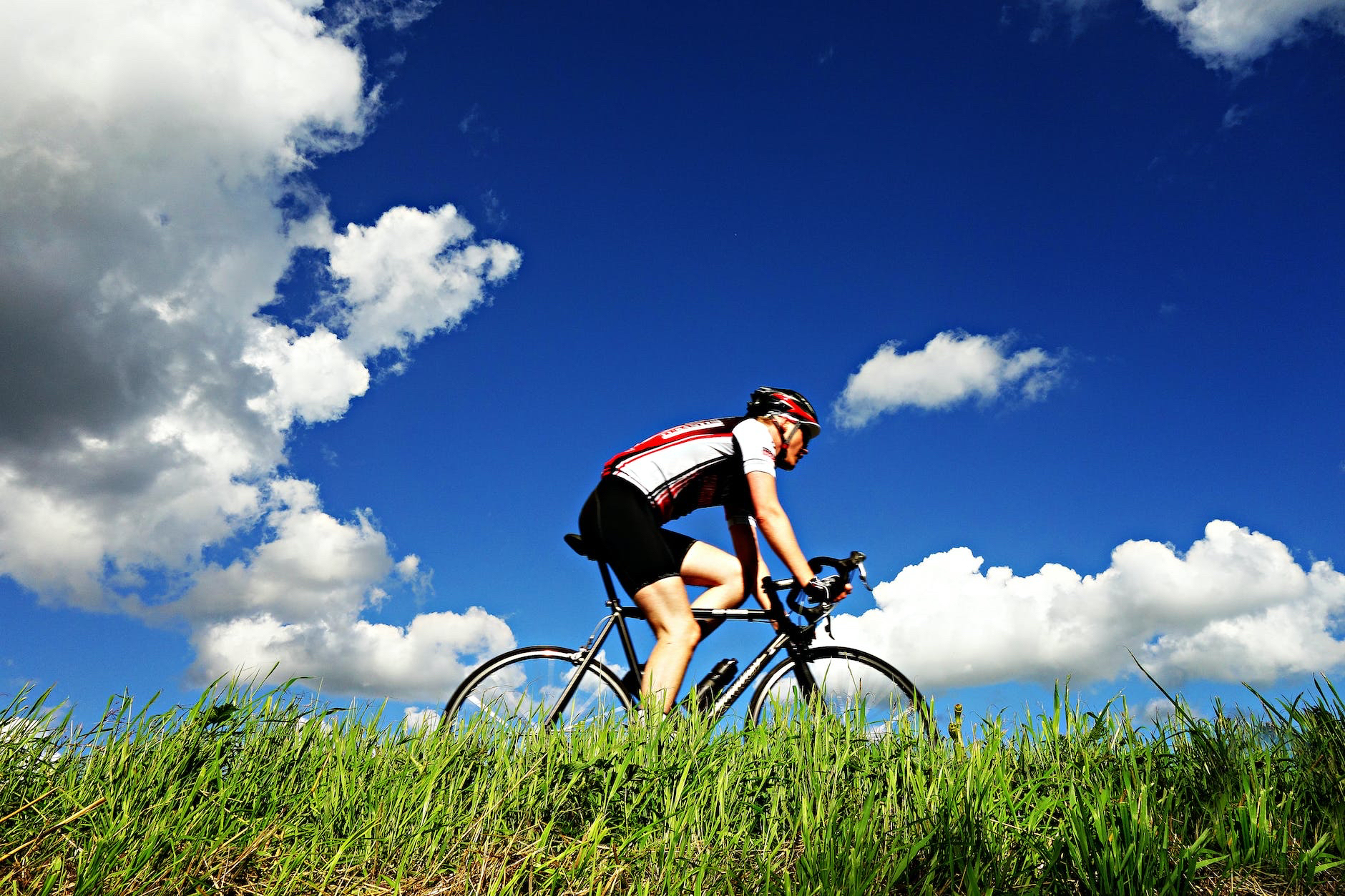
Having been somewhat of a runner before the fall, I didn’t realize how much being immobile would affect me. Due to the second surgery and some complications, I did not walk for six months and was not cleared to be on uneven surfaces for another year. That is eighteen months with little exercise other than walking around the house, the office, and the occasional trip to the store. One night, eighteen months after the fall, Gena and I were eating dinner at a local restaurant and somehow began discussing exercise and activity. We left the restaurant and went to a bicycle shop where I bought my first bike. I began riding in the neighborhood, but got bored with that quickly. I joined the Louisville Bicycle Club and went on a few group rides out of Jeffersonville, Indiana, and got some good advice on riding on roads. The journey had resumed.

My appetite for riding was insatiable. I read every article I could find about riding. Soon, my neighbor developed an interest and we started riding together. We would do long rides on weekends and one or two days during the week we would leave after work and ride the back roads of southern Harrison County. We would travel to ride and developed a great love of simply seeing the countryside from a bicycle seat. From 2013 until 2017 we road every chance we could find. One year, I logged over 3,000 miles on the bike. I love riding and am glad I found that as an option for fitness. But I am truly a fair weather rider. I do not like to ride when it gets much below sixty degrees. So what do I do during the months when it is cool? What do I do when it is raining? What do I do when I travel and can’t take my bike?

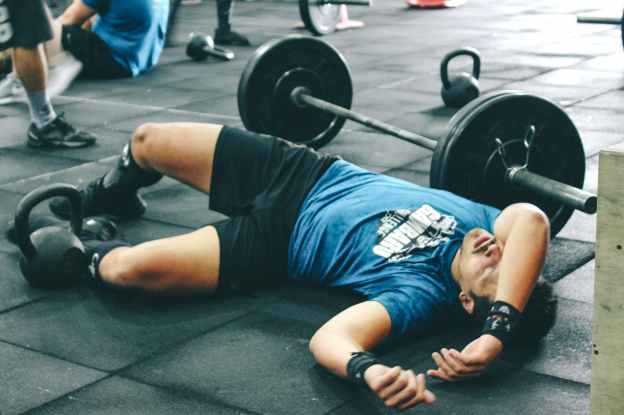
And along came Crossfit. I started going to CrossFit Enapay in September of 2016 with the express purpose of bettering my posture and becoming a better cyclist. Two and a half years later, it is hard to tell if I am a better cyclist or not. I haven’t ridden much because I don’t want to miss CrossFit. I have been bitten by the bug and LOVE it. I have noticed such a change in my overall fitness that I have not yet gone back to cycling. I plan to ride more this spring and summer but want to incorporate the total body fitness I get from CrossFit with cycling.

As I approach 60 (years of age, not miles per hour) I have finally learned not to try to keep up with the younger people in the gym. I am happy to compete only with myself. But I want to get back on the road. I want to hear the clank of the chain and derailleur as I change the gears. I want to hear the hum of the road slicks on the pavement. I want to hear the whistle of the wind through the side of my helmet. I want to feel the leg burn going up a steep hill and the exhilaration caused by the wind on my face going down the other side.

Had I not fallen and broken my leg, I do not think I would have found cycling. And as a result of the desire to be better at cycling, would not have found CrossFit. As I look back, I was upset, and even depressed, during the months that followed my accident. Now I am thankful for opportunities that have arisen out of that.‬ I am grateful for the new friends I have and also for the chances I have had to cheer and motivate others to expand their interests.

I am passionate about fitness and encourage everyone to be active. The best thing you can do for your mind and your body is to get off the carbs…and get off the couch. Get out there.

Benefits of CrossFit

A year ago, my wife talked me into trying a CrossFit Foundations class. She had recently completed her first (and ironically last) marathon and sustained an injury that prevented further distance running. She had searched for an exercise option that would allow her to participate freely and limit injury while improving cardiac endurance and building strength. I was skeptical, but was willing to try it just to appease her. I told her I would go through the foundations class and see how it went. Initially, I was not that excited about it but agreed to give it a six-month trial. Having also sustained an injury that prevented running, I had become an avid cyclist and decided to use the CrossFit as a way to become better at bicycling. I wanted to improve my posture, minimize back pain on the bike, and try to maintain some of the cardiac fitness level through the winter months. Well, a year later, I have been back on the bike three times but participate in CrossFit activities five to six times a week.

I am not wanting to suggest that CrossFit is for everyone. There are a multitude of options for staying fit. In fact, when I discuss physical activity with patients, fast walking is the activity I most commonly recommend. I rarely encourage adults to start running unless they use a run-walk-run technique to start (I.e. Jeff Galloway program). When discussing fitness with teenagers I usually highly encourage them into incorporating any type of activity in school that will carry over into adulthood. The major options of school sports that can be continued throughout a lifetime include swimming, tennis, golf, and cross-country/track (running). Developing habits early is important to keep an active lifestyle and help in the cross-cultural fight against obesity and inactivity (but that’s another issue altogether). The point is, you have to find something that fits your lifestyle, limits exposure to injury, and can be maintained over time.

It’s difficult for me to describe what CrossFit is. My initial superficial impression was that it was weightlifting, designed to add muscle without much cardio activity. I quickly found out that I was SO wrong. Using high-intensity training and several body-weight exercises, it attempts to improve overall muscle tone and strength. This includes the tone and strength of the body’s most important muscle- the heart. Earlier this year, as part of a medical work-up, I had to wear a heart monitor for thirty days. With the monitor connected, I continued to participate in CrossFit classes and found that while my resting heart rate stayed in the 40-50 range, for the daily hour of CrossFit my heart rate soared into the 170-180 range and stayed above 150 for about an hour.  This provided me with the evidence I needed that short-term, high intensity training can push the heart rate into training and “fat-burn” zones.

One of my favorite aspects of CrossFit is the programming that comes with it. Having a coach set up an exercise routine that cycles though muscle groups and activities makes it so easy to avoid focusing on one set of muscles or another. Left to my own, I tend to avoid different sets of exercises, always resorting to movements that do not push me as I need to be pushed. With CrossFit, I don’t have to think or plan out what I am going to do. I show up, TRY not to complain, and just do it!  There are occasionally activities that I can not do (some due to physical limitations, others due to age and lack of flexibility), but our coach always has alternative exercises or regimens that are scaled back to allow me to participate at the maximum level my body can take.

Over the past year, I have noted remarkable improvements in strength, endurance, flexibility, and most importantly, attitude. While I have not lost much weight, I have lost pant sizes. The lack of weight loss is more related to my nutrition that activity (abs are, after all, made in the kitchen). I did not take pictures before starting, but have seen changes that did not happen in my young adulthood. Yes, I ache and hurt constantly. But it is a good hurt. It is the hurt of using muscle groups that need work and the ache of strengthening required to become more fit. Because of the intense focus on technique, the incremental improvements can be slowed somewhat. This limits the potential for injury while insuring optimal sustainable gains in strength, balance, and endurance.

Having participated for almost a year, I have watched improvements in several benchmarks, seen changes in the fit of my clothes, and developed a family-type comraderie with people of all ages that I might not have otherwise. Being the fifth oldest member of our “box” (the CrossFit term for gym), I have to fight the urge to try to compete with others. I am learning to compete with myself only, while working alongside people less than half my age who are encouraging me, pushing me, and helping me become stronger. I will never be “the fittest”, however, I will always be fitter. As my coach told me recently, “You’ve got the rest of your life to get there. You don’t have a deadline.”

The CrossFit family cares for each other. They are supportive, challenging, and fun. They cheer each other on. Frequently the one who finishes last gets the loudest cheers and support. We also want to share what we have with others. In a society that needs to strive for better nutrition and fitness levels, CrossFit is filling a large gap. There is an adage we have recently picked up. It asks, “How do you know if someone does CrossFit Talk to them for five minutes and they will tell you.”  Not because those of us who do CrossFit are better than anyone else. We are just excited about what we are doing, the results we are seeing, and the fun we are having. I have not only sipped the CrossFit Kool-Aid, I have gulped it down and crave more.