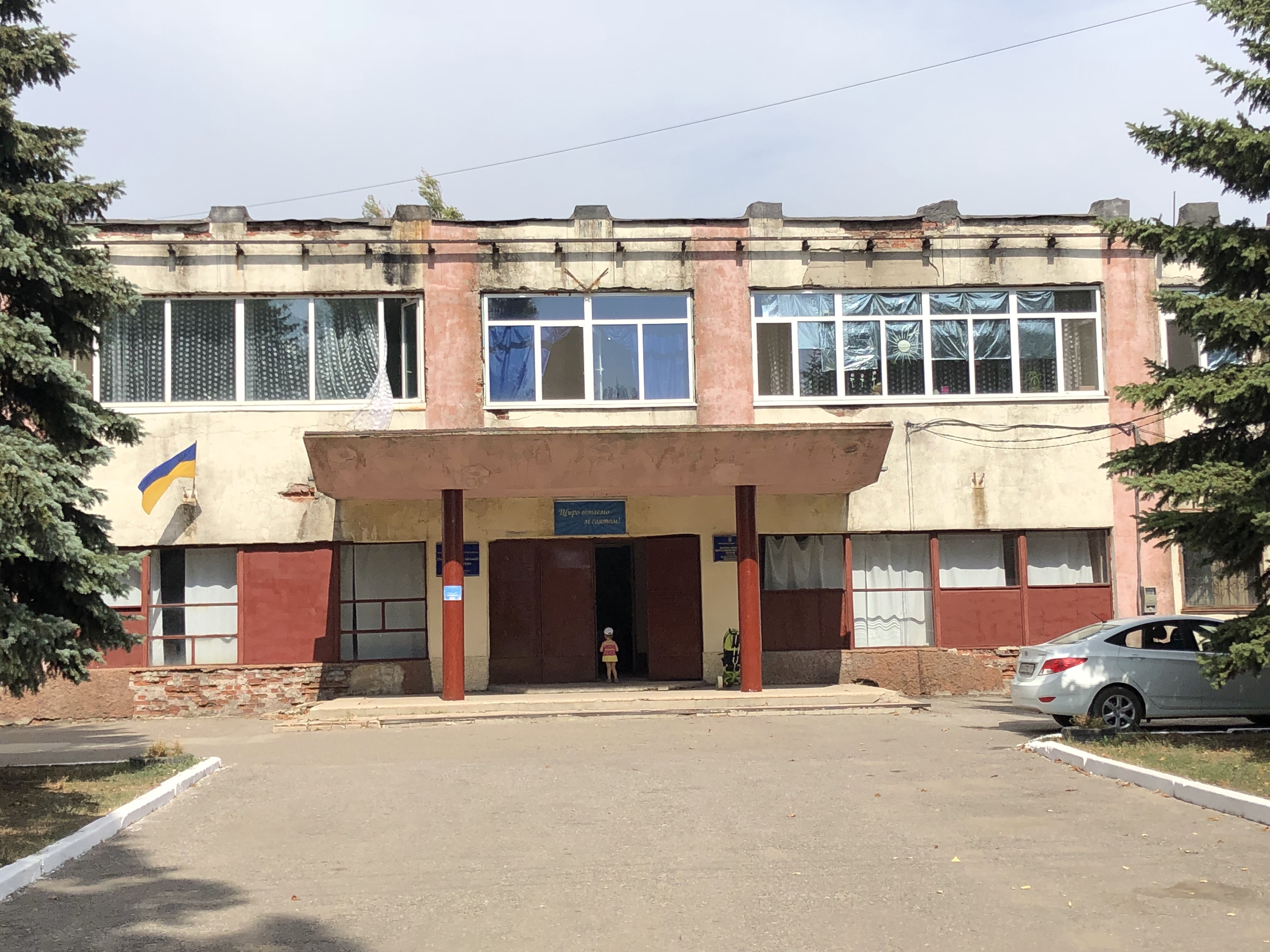
We woke up in Myrnograd to bright sunshine, with daylight coming by 5AM. After coffee and breakfast, the team loaded up in a van and two cars to head out for an hour drive to Ocheretino. Driving toward the front of a civil war is a little daunting experience. Upon arrival in the village, we pulled up to what was once a community center. As we began unloading supplies, some of us hurried inside to survey the building and determine our best way to set up to see the villagers that would be coming to us for care.
The decay from disuse was astonishing. There was electricity, but no light bulbs. The outlets worked in a few places but overall were not helpful. It reminded me of a community center (complete with a small theatre stage) from the 1950’s that had been closed in 1965 and not tended to since. There were rooms with mirrors and ballet bars, strewn with costumes. There were toilets with buckets for flushing and a trickle of water supply to the sinks and buckets. Amazing disarray.
We found a large room and quickly set it up with several tables, stools, three clinical stations, and a pharmacy. We also set up another room for eye exams and dispensing of reading glasses. The registration area utilized three-seat portions of the theatre seating that had been pulled out of the dilapidated theatre. And finally we were ready to begin our day.
On that day, we saw over a hundred patients, mostly with diabetes and hypertension. Most of the villagers had a doctor, but couldn’t afford to see them or fill their meds. It took a few patients to adjust my thought processes from trying to take care of every detail to one of trying to take care of the biggest needs first, realizing the limitations of long-term follow-up and resources. And most importantly, the need that we did not want to overlook in every patient was being sure to let them know that they were important. Even though their region, home, families, and lifestyles had been significantly affected by the civil war, there were people who cared for them. They were still God’s children and important to Him, so they were important to us. The stories of pain, anguish, and despair were prevalent, topped with depression and searching. Interestingly, though, I did not get a sense of anxiety. Despite the overwhelming odds against future economic fulfillment, depression was rampant, but they were not anxious. That is one thing that is much different from home.
I could share several stories (and probably will eventually) that people told us about their situation. I never want to forget that each of these people is an individual with a specific story to tell. But I also want to look at the bigger overall picture. I do not want to get involved in the politics, but do want to get involved in the social imperative to help them in their struggle. These people are not asking for much. They want to eat, take care of their families, and have a place to sleep. They are not looking for fulfillment. They are at the bottom of Maslow’s hierarchy of needs. I have a chance to meet some of those needs and cannot ignore the opportunity. I pray for these people and that we will become more aware of their struggle. And also, I realize there are many more regions in the world with similar stories. I hope I do not forget their stories, faces, smiles, and hugs. I pray for the opportunity to serve them more fully.
You want to look at the bigger overall picture, and not get involved in politics. Politics, international and regional, is the root cause of the problems there. You are admirably providing needed care, but resolution of the “bigger overall picture” will require political resolution.




Thank you for what you are doing, God will reward you in a big way, I will pray for you and all of them there, be safe !
LikeLike
You want to look at the bigger overall picture, and not get involved in politics. Politics, international and regional, is the root cause of the problems there. You are admirably providing needed care, but resolution of the “bigger overall picture” will require political resolution.
LikeLike