Category Archives: Uncategorized

Two Days in Pokrovsk, Part 2

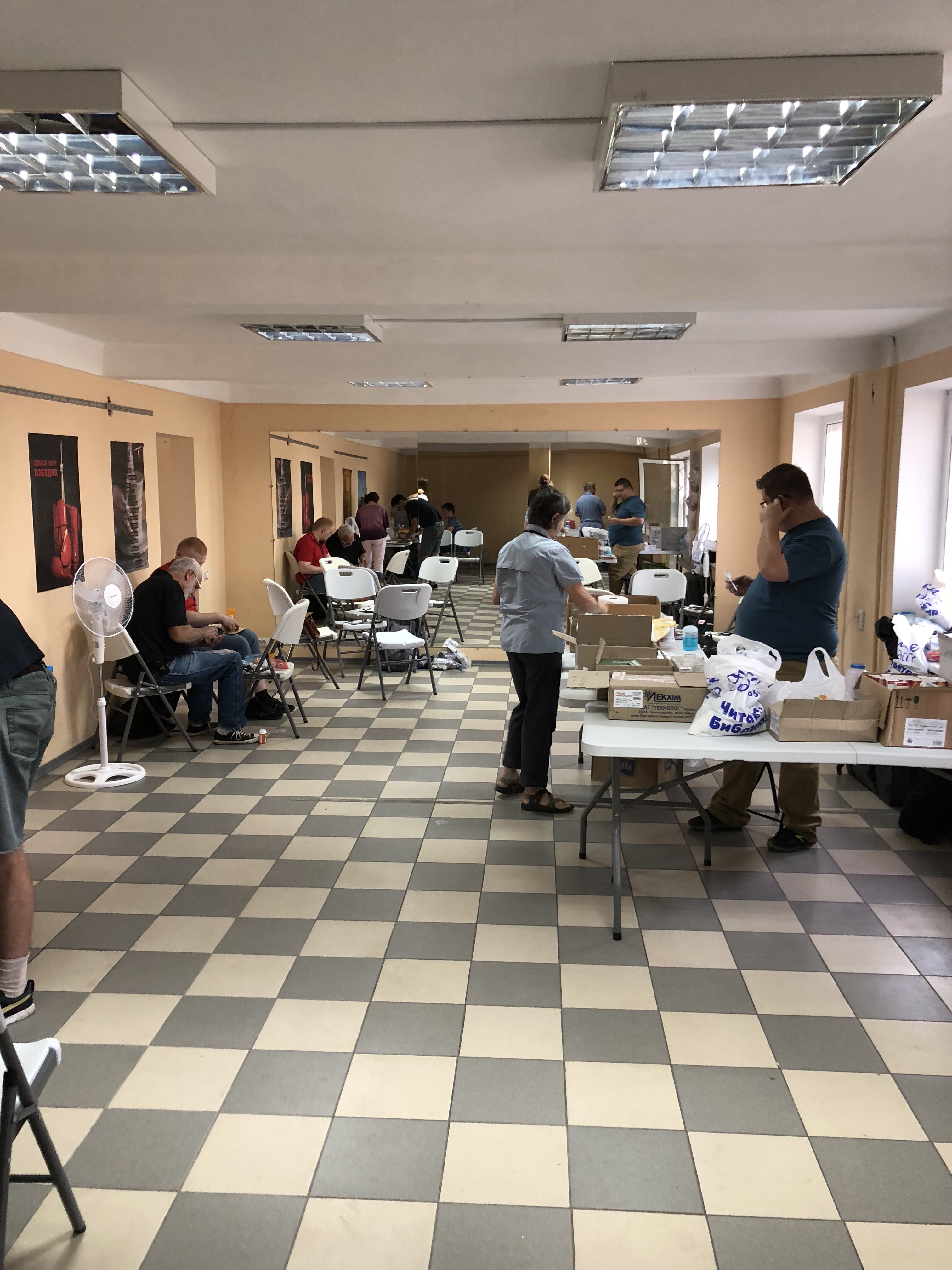
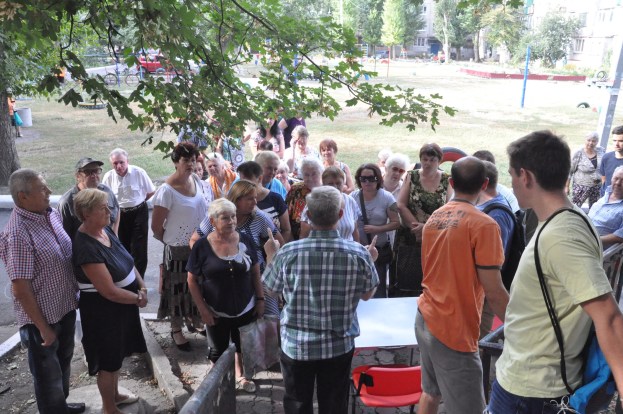
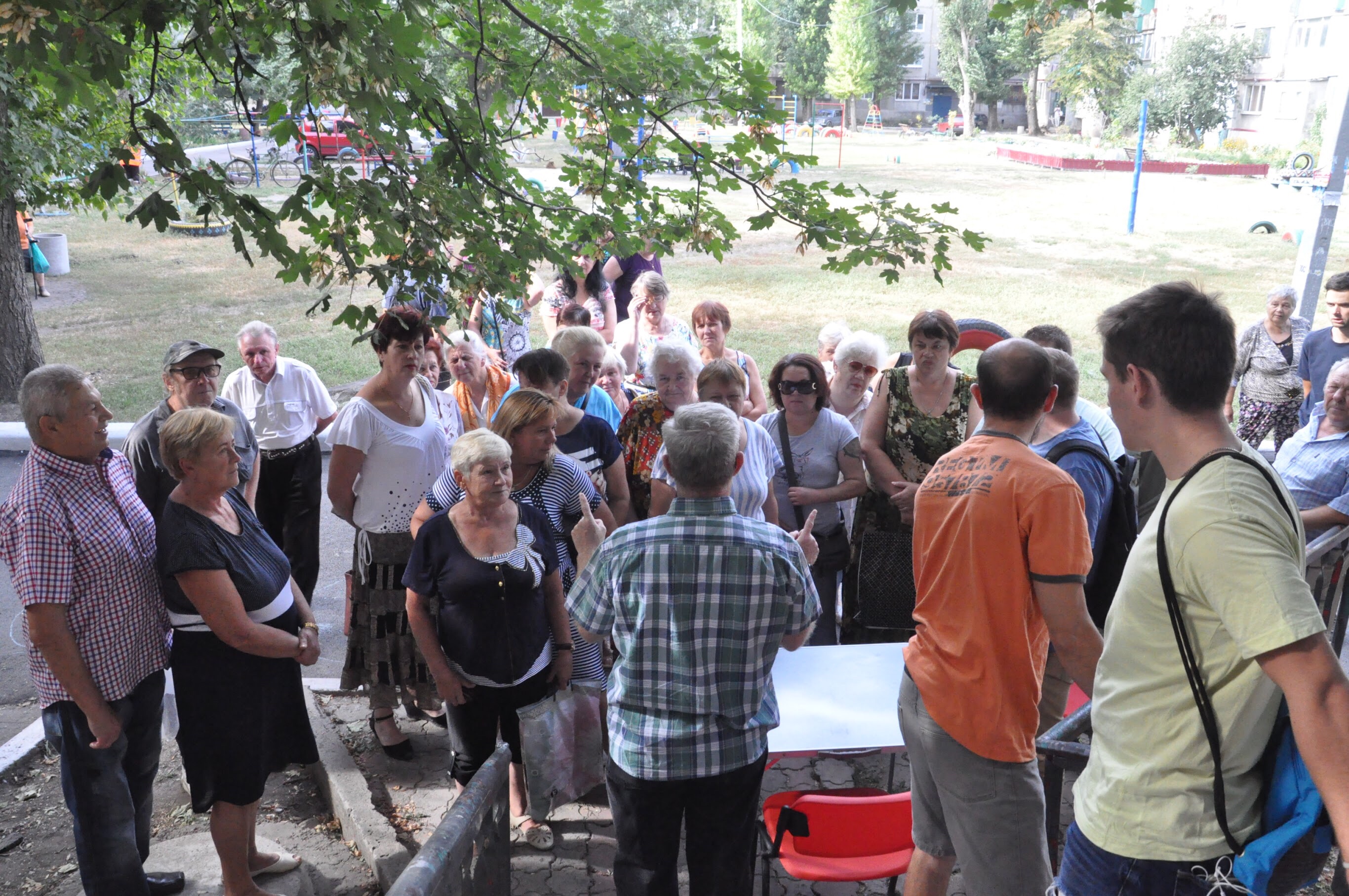
This was a day of heartache. Upon arrival at our little clinic in the first floor room in one building of a large apartment complex, there were thirty or so people waiting for us. As we walked through the group, they parted, whispering in quiet tones in a language I can’t understand. What were they saying? Were they commenting on our dress? Were they discussing us at all? Were they simply making small talk? Given the cultural climate here, distrust is a fairly common sentiment. As the day went on, most of my questions were answered.

While we still saw many people with common illnesses (hypertension, diabetes, arthritis), this day was quite a bit different. The word had gotten out that “American doctors” (and nurse practitioner) were there to offer free care and advice. We began to see people with chronic, debilitating issues, grasping for hope that there was a solution for their untreatable problems. Many of them have local health care, but cannot afford the recommended treatment, cannot travel the long distances for specialty care, or do not have the resources for even what we consider basic care. This day was a day of reassurance and emotion, for the patients, their families, and for us.
For those who already have access to the care system, as difficult as it is, we did not want to undermine the treatment they were receiving. We wanted to reassure that the care and options they had were good and that they should continue with what they were already doing. The last thing we wanted was for someone to walk in to the clinic of their Ukrainian doctor and tell them that “the American doctors” said that you are treating us incorrectly. We did not want to add to the distrust held toward any societal service. While not ideal in our culture, they are really giving excellent care given the resources they have.
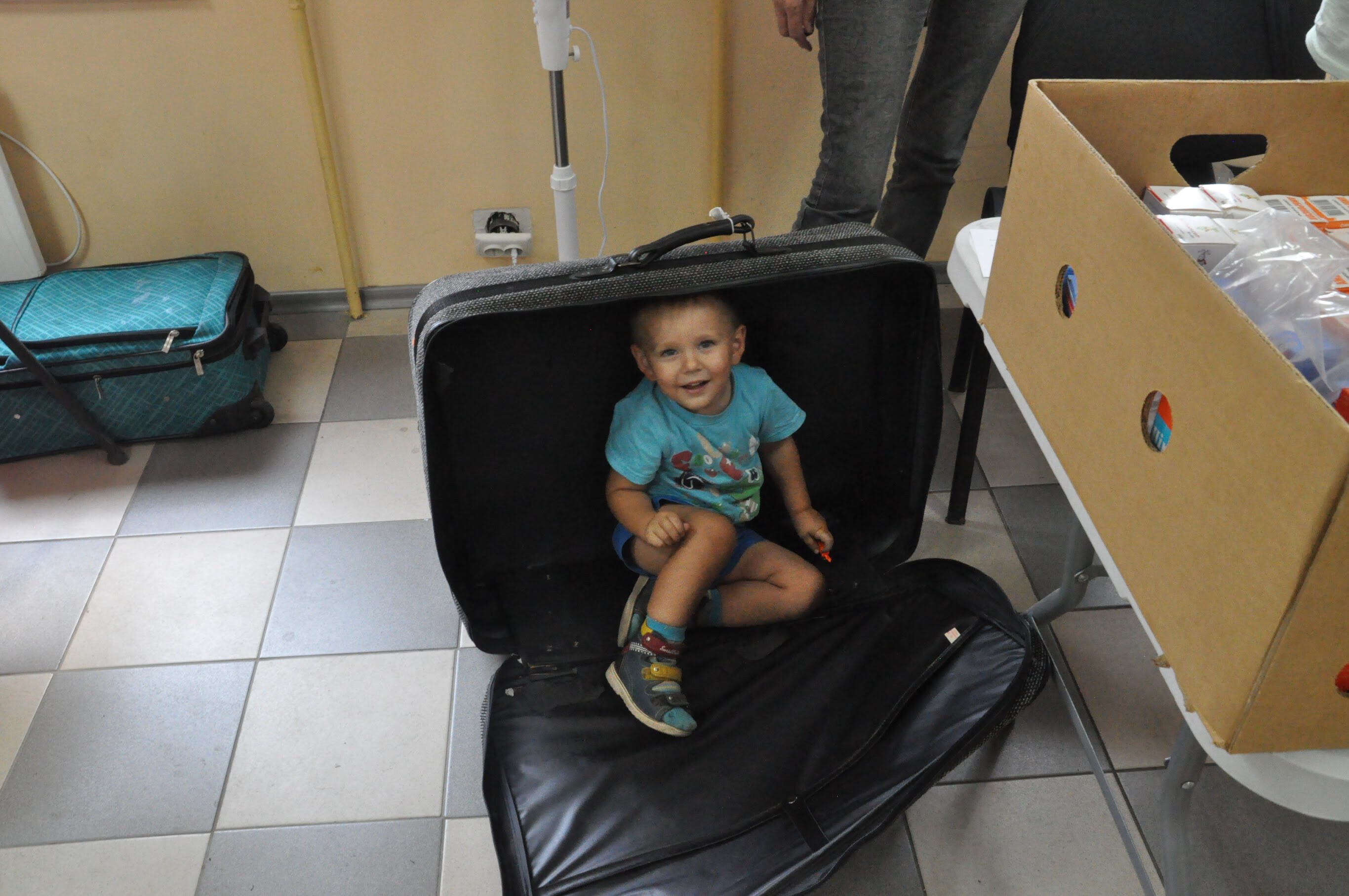
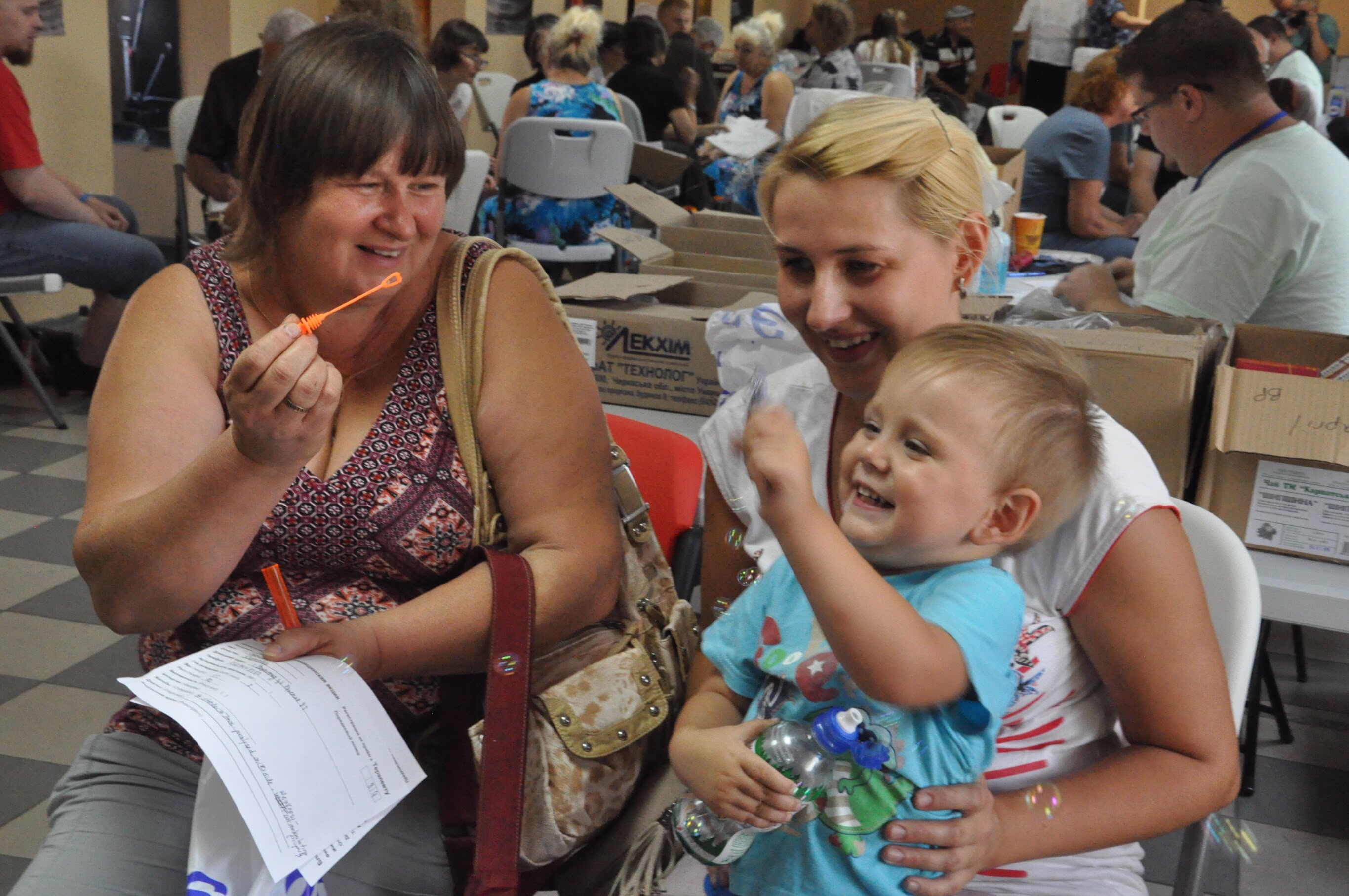
One of my favorite memories will be of a 4-yer-old boy with a previous stroke at 7 months of age, brought in by his mother and grandmother for advice on how to “make him like the other children”. He had lost some use of his right arm and leg and had an unusual gait, but managed quite well. He played with bubbles, ran around the room, climbed up on my lap, and was developmentally appropriate for age. He had seen a neurologist and undergone physical therapy early, but the three-hour drive for therapy twice a week and eight-hour drive to see his specialist every six months was a financial strain on the family. After a long talk (through my excellent interpreter, Dima) and a lot of tears and bubbles, the mother and grandmother seemed relieved. They felt guilty that there was more that they should be doing. I offered to take him home with me and he climbed into a suitcase and tried to zip it closed. His grandmother said he come travel with me, but she would have to come for a visit later this year. There were a lot of tears everywhere.

Another patient came in with his wife complaining of high blood pressure and back pain. As we talked, I found out that over a year ago, he and his wife had left the region of the front in the civil war. There seventeen-year-old son was to follow an hour behind them and has not been seen since. The father has vowed not to shave his beard until he sees his son. They do not know if he was captures, ran off to join the army, or was killed. The emotional anguish as he told his story was obvious. Here, everyone has a similar story, so no one listens. Just listening to him and validating his feelings toward his son, while providing some basic care, gave him some relief. He hugged me hard enough to squeeze the ache out of my lower back.

The worst of the day, though was early afternoon when a lady was brought in with her disabled husband (obviously from a stroke, using a cane), crying loudly. Her right leg was bandaged and I went to meet her in the triage area. We carried her inside for a little privacy while trying to understand what was wrong. As I began to unwrap the leg, my interpreter was telling me that she had just come from the local hospital where she had been seen and told her leg needed to be amputated. She refused and left, hobbling in pain with her invalid husband at her side, and came to us. She cried that she could not have an amputation, because she had to care for her husband. If she could not get around, they had no one to get their groceries or care for them. In her mind and culture, an amputation would mean a lonely period of starvation and ultimately death for both of them over the next several months. Here, there is no set up for care of anyone who is disabled. The family or community provides that care, but they have been displaced from their community and have no family near them. Without providing details, I will simply say that it was one of the worst physical situations I have seen and I agree that only amputation will save her life. She came in saying she would rather die than have the leg removed. We were able to connect her with some local church members who offered to provide transportation and attempt to find help for both of them. Again, it was heartbreaking for all of us. If she were in the United States with the best healthcare access in the world, I’m not sure she could survive this process.

So, back to my original questions about what was being said as we walked into the clinic. I think it was evident by the end of the day through these and many other stories that trying to encourage, reassure, and listen is as important as “fixing” a problem. Here, the people want to be told they are being cared for appropriately and sometimes, things cannot be fixed. They are generally accepting of unfixable problems and grateful that someone listens. Today was a day of listening. It was not necessarily one of understanding what was being said, but listening nonetheless.

Two Days in Pokrovsk, Part 1

Pokrovsk, Day 1

Today, we set up clinic in an apartment building on the first floor in a small room. Another doctor, a nurse practitioner, and I set up with our interpreters as well as our pharmacy and optometry student. The optometry student (Anya) saw almost every patient, doing cursory eye exams with a chart and dispensing the glasses we had as well as handing out the reading glasses we brought. She was the most popular and probably provided the most immediate gratification to patients. Many people came just because they could not read anymore. Through donations of reading glasses (and many prescription pairs as well), we were able to offer help that many of us take for granted. There were some fashion-conscious patients who wanted more options in frames, but nevertheless were happy with improved vision.

We were able to see more than twice the number of patients we can see at home, mostly because we were not spending our time with computer documentation. Here, the idea of “quality health care” means “I can sleep better tonight and have my medications for the next month”. We were able to give many medications out in supplies that help people in making ends meet. In Ukraine, the average retirement pension is around 1400 hryvnia, which is about $50 in US currency. Given an electric bill of $10, a winter heating bill of $150-200, food, and rent, the choices are often very simple…eat or buy medications. Through generous donations and forethought of prior medical teams, many meds were available or brought with us. A $4 med at a local pharmacy means nothing to us, but could mean several meals for a displaced Ukrainian.

Mostly, we saw patients with hypertension, diabetes, and arthritis, but also quite a bit of suffering from losses and displacement associated with the war. We saw more children today and also more anxiety and depression. We are all heartbroken with the stories of displacement from the war-torn areas. The apartment buildings are packed with people from all over, many who have not seen family members in over a year. Also, the lack of social resources is significant. Grief counseling, support for mental health disorders, and specialty care are lacking. Kiev is the nearest location for psychiatry, neurology, and other specialty resources and is about eight hours if all goes well. Many times, that is not practical from either a time or economic standpoint.

As before, the people we have met for the most part are very appreciative of the chance they get to have someone available to listen, even if the resources for response are limited. Most are happy to be given a small bag or Tylenol or ibuprofen, or even vitamins or a toothbrush. They are responding to the simplest effort to show them that someone cares. I hope to continue reaching out with compassion and a ear that listens, even if I don’t understand the spoken language. The smiles and hugs we receive are not language-dependent.

Day 1 – Ocheretino, Ukraine

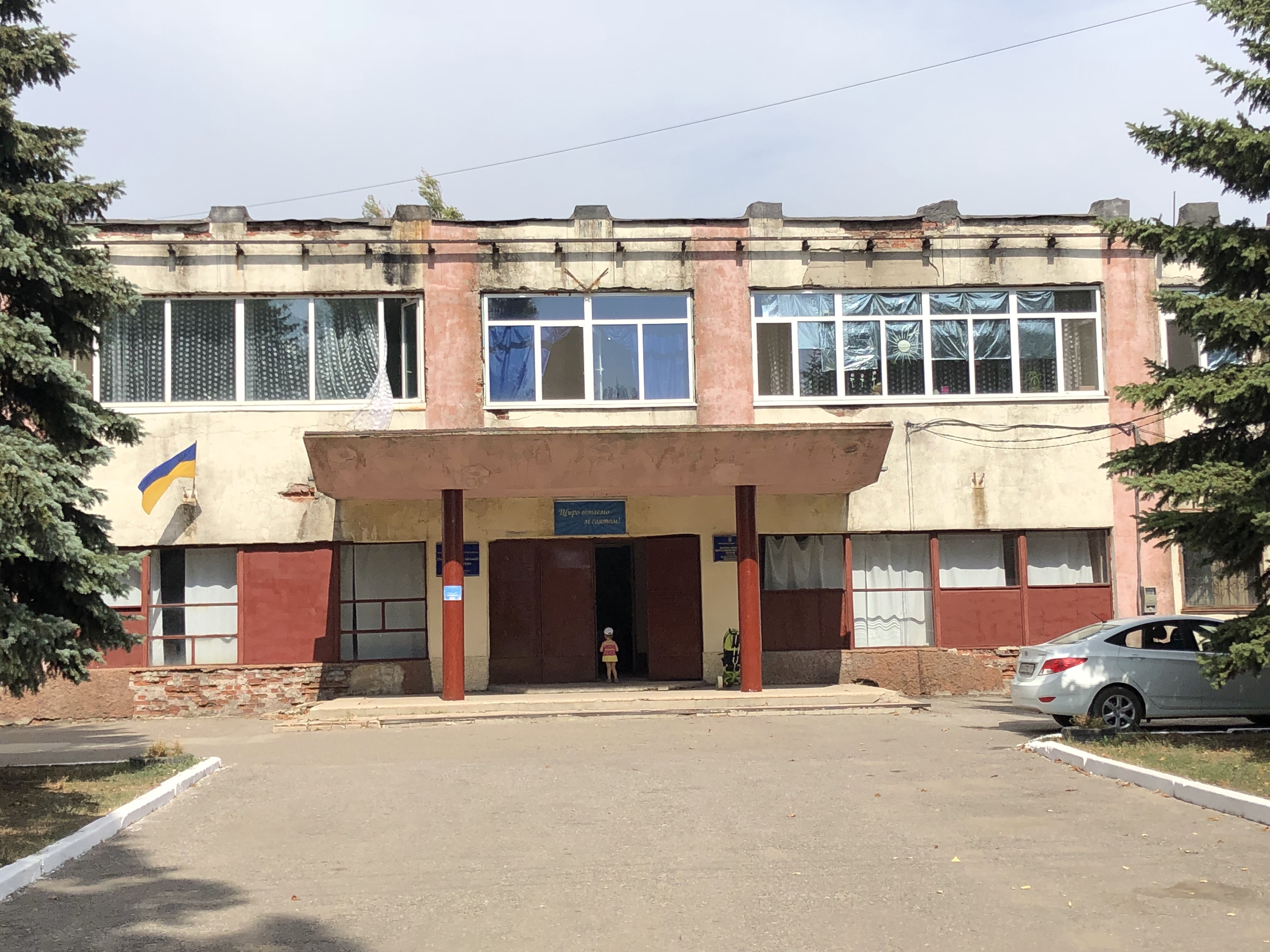
We woke up in Myrnograd to bright sunshine, with daylight coming by 5AM. After coffee and breakfast, the team loaded up in a van and two cars to head out for an hour drive to Ocheretino. Driving toward the front of a civil war is a little daunting experience. Upon arrival in the village, we pulled up to what was once a community center. As we began unloading supplies, some of us hurried inside to survey the building and determine our best way to set up to see the villagers that would be coming to us for care.

The decay from disuse was astonishing. There was electricity, but no light bulbs. The outlets worked in a few places but overall were not helpful. It reminded me of a community center (complete with a small theatre stage) from the 1950’s that had been closed in 1965 and not tended to since. There were rooms with mirrors and ballet bars, strewn with costumes. There were toilets with buckets for flushing and a trickle of water supply to the sinks and buckets. Amazing disarray.
We found a large room and quickly set it up with several tables, stools, three clinical stations, and a pharmacy. We also set up another room for eye exams and dispensing of reading glasses. The registration area utilized three-seat portions of the theatre seating that had been pulled out of the dilapidated theatre. And finally we were ready to begin our day.
On that day, we saw over a hundred patients, mostly with diabetes and hypertension. Most of the villagers had a doctor, but couldn’t afford to see them or fill their meds. It took a few patients to adjust my thought processes from trying to take care of every detail to one of trying to take care of the biggest needs first, realizing the limitations of long-term follow-up and resources. And most importantly, the need that we did not want to overlook in every patient was being sure to let them know that they were important. Even though their region, home, families, and lifestyles had been significantly affected by the civil war, there were people who cared for them. They were still God’s children and important to Him, so they were important to us. The stories of pain, anguish, and despair were prevalent, topped with depression and searching. Interestingly, though, I did not get a sense of anxiety. Despite the overwhelming odds against future economic fulfillment, depression was rampant, but they were not anxious. That is one thing that is much different from home.

I could share several stories (and probably will eventually) that people told us about their situation. I never want to forget that each of these people is an individual with a specific story to tell. But I also want to look at the bigger overall picture. I do not want to get involved in the politics, but do want to get involved in the social imperative to help them in their struggle. These people are not asking for much. They want to eat, take care of their families, and have a place to sleep. They are not looking for fulfillment. They are at the bottom of Maslow’s hierarchy of needs. I have a chance to meet some of those needs and cannot ignore the opportunity. I pray for these people and that we will become more aware of their struggle. And also, I realize there are many more regions in the world with similar stories. I hope I do not forget their stories, faces, smiles, and hugs. I pray for the opportunity to serve them more fully.

Which chair?

There are other places to sit. There are the comfortable chairs in Gena’s study. They each have a side table for coffee cups or water mugs. I already have reading glasses on the table. The light is good and the temperature is comfortable. Also, there are the chairs in the bedroom. Similarly, there is a table between them, equipped with coasters and reading glasses. The desk in my study is equipped with a very comfortable office chair, excellent lighting, access to all of my gadgets and office supplies as well as the technology hub of the house. These are all very good options for quiet time, study, browsing, work, and reading.

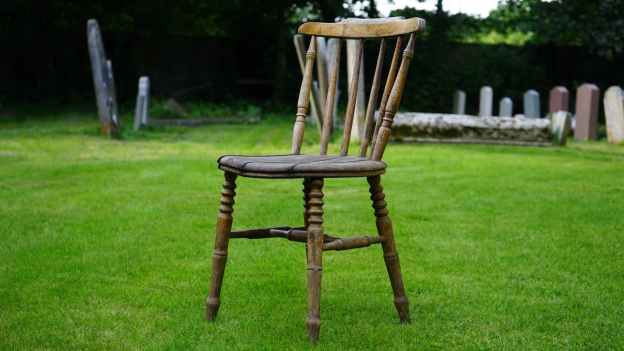
Why, then, do I migrate to the chair in the living room? Why do I choose (especially on weekends) to sit in a chair that does not support my aching back? Why do I choose to sit in a chair that is not particularly comfortable in that there is no comfortable head support (or at best the head support of today’s cars)? Why do I sit in a chair, that when reclined, my ankles rest off the hard footrest making it necessary for me to position a pillow on the foot rest to make it bearable?

Wait. Did I say “reclined”? I did, didn’t I? Okay…it’s becoming clear now. I think I choose this chair because it reclines. I am lazy. I tell myself I want to read, write, browse, review, and collect information. I tell myself I want to be effective and organized, collecting information to store and use later. I tell myself that the iPad Pro works as well as my desktop. But the reality is, I want to recline. I want to be lazy and be able to nap when the notion hits me. It all makes sense now. I had planned to do some journaling and writing this morning, but now that I’ve figured that out, I think I’ll kick back and …..

Brooksapalooza 2017

I never knew him. I only met her, years ago, after she had a disabling stroke. So I never really knew them personally. But I have come to know them through their legacy. Ray and Athleen Brooks must have been wonderful people. Through their close-knit six children and their extended families, I have come to see how faith, family, and loyalty can spread like a wildfire.

The origins of the family in the coal mining hills of West Virgina are well known and discussed among family members at regular family reunions. The youngest son is well versed in family and Huff Creek history. Any disputes can be quickly settled with a quick question followed by an authoritative response- a wonderful reference to have.

I, like several others now, married into the third generation that started with Ray and Athleen. We have all been accepted as if we are blood relatives and now we (affectionately known as the outlaws) are engrained with the family traditions. We have been given roles of photographers, cooks, organizers, and referees. We are part of the group.

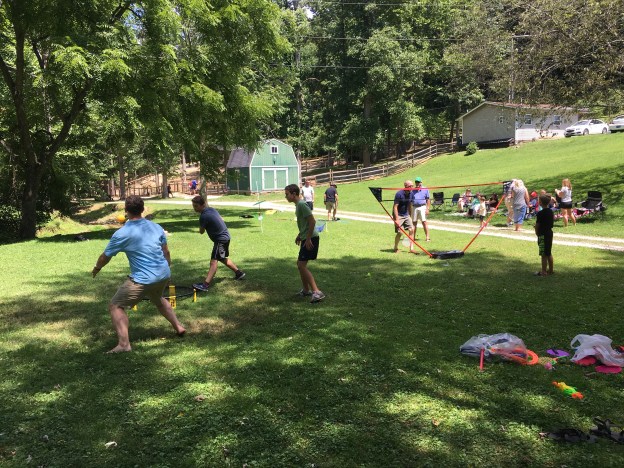
This weekend, over fifty of us through three generations gathered for a time of fun, food, catching up, and just general reminiscing. Though we are now short one sibling through death and another through Alzheimer’s disease, their families were well represented. The companionship of cousins was fun to watch.

Though separated by distance from Chicago to New York to Miami to Virginia to Wisconsin to Indiana and back home to West Virgina, everyone seems to truly enjoy the company of family. I haven’t said it before, so I’ll say it now. Thank you, Ray and Athleen Brooks for giving us this family.

Brown County, Indiana

Living in southern Indiana as an immigrant from Tennessee, I have never been considered a “true Hoosier”. We are about 2 hours away from Brown County (Nashville) and have always heard about what a nice place it was to visit, but in 24 years, had never been there for more than an hour or so when passing through. So when the opportunity came up for an unplanned long July 4th weekend, we decided to take the RV up and see what was there.
Making late reservations and wanting a full-service site, we ended up at Westward Ho. KOA and Brown County State Park did not have sites available for the time period and with the services we wanted. The park, while along a noisy road, is adequate for us. We had a nice roomy site under a tree with room to park our car. Also, there was plenty of grass to walk our dog (she especially liked walks around the lake and listening to the bullfrogs). While the traffic from the main road was a little noisy outside, inside was quiet with no noisy campers. My understanding is that the owners patrol and are pretty good at keeping things controlled. We did not use the bath house, pool  or Wifi but  all-in-all this was a very decent place to stay with reasonable rates and met our needs.
Directly across the road was the Brown County Winery. They were very accommodating and had some surprisingly delicious wines. This is definitely a place to visit. Also, Gnaw Bone BBQ is less than a mile away and has pork tenderloin that must be tasted. The sandwich is large enough for two meals and (word to the wise) don’t get a large order of their homemade chips unless you plan on eating them the rest of the week. Miller’s Ice Cream, Big Woods Brewing Company, and Out of the Ordinary are other eateries we tried and enjoyed. The Quaff On beers at the downtown pub make a nice rest stop on a hot day.
We strolled through downtown shops for a couple of days, browsing and wandering with no set time schedule. Even for a holiday weekend, while parking was a little difficult, the crowds were not as bad a expected.  We did find out that the streets pretty much role up at 7:00 pm on weekdays. It was difficult to find a place to eat after that. Also, if you need wifi or cell coverage for work or just can’t get away from access, there are many dead spots and download speeds are very slow at best. I was able to remote in for work, but lost connectivity several times.
In summary, Brown County, Indian is a quaint getaway spot with loads of interesting shops that have absolutely nothing I need to buy.

RV Stay in Brown County, Indiana

Living in southern Indiana as an immigrant from Tennessee, I have never been considered a “true Hoosier”. We are about 2 hours away from Brown County (Nashville) and have always heard about what a nice place it was to visit, but in 24 years, had never been there for more than an hour or so when passing through. So when the opportunity came up for an unplanned long July 4th weekend, we decided to take the RV up and see what was there. 

Making late reservations and wanting a full-service site, we ended up at Westward Ho. KOA and Brown County State Park did not have sites available for the time period and with the services we wanted. The park, while along a noisy road, is adequate for us. We had a nice roomy site under a tree with room to park our car. Also, there was plenty of grass to walk our dog (she especially liked walks around the lake and listening to the bullfrogs). While the traffic from the main road was a little noisy outside, inside was quiet with no noisy campers. My understanding is that the owners patrol and are pretty good at keeping things controlled. We did not use the bath house, pool  or Wifi but  all-in-all this was a very decent place to stay with reasonable rates and met our needs. 

Directly across the road was the Brown County Winery. They were very accommodating and had some surprisingly delicious wines. This is definitely a place to visit. Also, Gnaw Bone BBQ is less than a mile away and has pork tenderloin that must be tasted. The sandwich is large enough for two meals and (word to the wise) don’t get a large order of their homemade chips unless you plan on eating them the rest of the week. Miller’s Ice Cream, Big Woods Brewing Company, and Out of the Ordinary are other eateries we tried and enjoyed. The Quaff On beers at the downtown pub make a nice rest stop on a hot day. 

We strolled through downtown shops for a couple of days, browsing and wandering with no set time schedule. Even for a holiday weekend, while parking was a little difficult, the crowds were not as bad a expected.  We did find out that the streets pretty much role up at 7:00 pm on weekdays. It was difficult to find a place to eat after that. Also, if you need wifi or cell coverage for work or just can’t get away from access, there are many dead spots and download speeds are very slow at best. I was able to remote in for work, but lost connectivity several times.

In summary, Brown County, Indian is a quaint getaway spot with loads of interesting shops that have absolutely nothing I need to buy.

Understanding with an Accent

I haven’t figured this out yet, but I have trouble understanding British accents. My wife and I will sit down to watch a TV show or movie and the minute someone starts speaking in a British accent, I find myself losing the plot. For some reason, my brain does not process the conversation. Funny, because I do not have the same problem with other accents. I can follow Nordic, Slavic, Middle Eastern, African, French, German, Indian…most all others. But when I try to follow “Call the Midwife” or “Downton Abbey” or “Sherlock”, I need the TV turned up and no other distractions.

Maybe it’s a type of attention problem. Maybe it’s hearing loss at a certain pitch brought on by years of listening to loud music. I have noticed that I do better with “Sherlock” than the others, but maybe that’s because I like the story line and concentrate more on following the story. Maybe it’s my southern heritage and tendency to hear and speak more slowly. Maybe it’s the idioms. (A boot is something you wear, not put groceries in.)

I try. I will sit down, remove distractions, and turn up the volume. But usually, 15 minutes in to a program, Gena is wishing I would leave. She gets tired of rewinding the DVR to catch what I missed. Oh well, guess I’ll just have to avoid BBCTV. This is something else to blame on my rural Tennessee upbringing.

Productivity Apps

I confess. I am addicted to todo lists. I love the idea of checking off things from a list I have prepared to keep my feeble mind from forgetting things. However, I do take it to extremes. Not the point of a friend I had in residency who would write out a paper list every day and include such items as “brush teeth” and “pick up newspaper”. Back in the day, I was a big fan of the Franklin-Covey method of listing, assigning priorities, and making sure the important things were done first. A few years ago, though, I migrated to using electronic versions and have tried many programs, apps, and systems. I have found myself always searching for one that meets all of my personal (and professional) needs. I have decided that the perfect option does not exist.

Currently, I am using Informant (formerly Pocket Informant, by Fanatic Software). I have used this off and on for years and really like a lot of the options and flexibility it gives. A few shortcomings have made me look at a few other options and I now have Wunderlist, Any.do, Toodledo, and Todoist ALL on my phone, iPads, and computers. I am continuing to refine my search and plan to list pros and cons of each one later this week. I am anxiously awaiting the release of Informant 5 (hopefully today) and would welcome an end to my search. We’ll see.

Here is a running list of pros and cons for the apps/programs I have tried:

  • Informant- I have used this for years with many iterations and have been loyal to the company. The move to primarily iOS has left some of my devices behind, but I have tried to stay with it because of a long-time investment. I have to admit, the recent “upgrade” is what made me sort looking for other options.
    • Pros
      • Multiple priorities for sorting tasks
      • Templates added easily
      • Projects with multiple tasks easily added and copied
      • Easy copying of tasks
      • Easy to skip occurence of repeating task
      • Combines calendar AND tasks, making one app for both- helps me schedule tasks on future days knowing commitments
    • Cons
      • Sync through Toodledo to get to Windows, therefore requires subscriptions to both Informant AND Toodledo for full functionality
      • Possibly too many options. Can take a while to get everything zoned in
      • Search can be confusing
      • Having purchased many versions (Android, iOs, macOS, etc) I admit I am frustrated when a new version comes out and I have to purchased another one. Informant Sync is useless to e because I need to be able to run both macOS and Windows environments. That requires me to run through Toodledo, which requires another subscription. So…the jury is out on the recent changes.
  • Todoist
    • Pros
      • Multiple priorities for sorting tasks
      • Easy swipe actions for updating tasks
      • Simple, straight-forward, easy learning curve
    • Cons
      • No templates
      • Projects with multiple todos difficult to repeat
      • Just added- ability to copy tasks!
  • Toodledo
    • Pros
      • Multiple priorities for tasks
      • Easy to duplicate/copy tasks
      • Lists, Notes, Outlines, Habits functions are handy
    • Cons
      • Sync can be a little slow at times
      • Clunky mobile interface
      • Repeating tasks take several seconds to reset and remain on current date
  • Wunderlist
    • Pros
      • Easy to enter tasks
      • Beautiful interface
    • Cons
      • Only 2 priorities- standard and starred
      • Not enough functionality for me to sort by importance
  • Swipes – This is a new app for me. I am intrigued by its design. I really like swiping off completed tasks as opposed to checking a box, so this is a plus. I haven’t used it enough to understand full functionality, but so far I am impressed.
    • Pros
      • Tasks set by time instead of priority. You can set a priority task, but like Wunderlist, there are only two levels.
      • Easy to schedule
      • Recurring tasks are easy to add
      • Uses Workspace concept to sort (i.e. tags)
      • Easy search functionality
      • Action subsets easy to add
    • Cons
      • Only two levels of priority
      • No integration with Siri, IfTTT or for that matter anything other than Evernote and Gmail. Syncing across platforms or making workflow additions is hindered by this.
      • “Premium” service yet to be added. I’m not sure when this will go to a subscription service, but expect it to be necessary soon
  • Any.do
    • Pros
      • Long list of options when adding task
      • Easy to reactivate completed tasks
    • Cons
      • Clunky to add recurring tasks
      • Free version (trial) doesn’t allow use of recurring tasks, so difficult to evaluate without purchase
      • Web site simple, difficult to find Today’s tasks
      • No way to have untimed daily tasks- must assign a reminder time
      • Can’t experiment with free version by syncing devices to see if it works and how

Healthcare Reform from a Primary Care Perspective

I haven’t written on my blog in quite a while. There are several reasons for this, but I will avoid listing them to prevent your boredom. However, I have come across a recently published book that has struck me. America’s Bitter Pill by Steven Brill is (so far) an excellent book that looks at the politics and policy of recent attempts to fix our healthcare system. As a practicing physician and also a consumer of healthcare, I wanted to highlight some of the statements he makes and occasionally make personal comments. I am in no way an expert on healthcare economics, public policy, or politics. My comments are simply observations from more than twenty years of caring for patients and helping them navigate the healthcare system. Many statements are anecdotal and not backed by science. In advance, forgive my tendency to get on my soapbox. I can be extremely passionate about some things. 
  • “Healthcare is by far the nation’s largest industry, employing one-sixth of the workforce.”
  • “People care about their health more than they care about healthcare policies and procedures.” – I know that when I talk with a patient that has a condition similar to something I (or a family member/friend) have experienced, my counsel is much more appreciated. 
  • “60% of personal bankruptcies result from healthcare costs.”
  • “The US ranks 31st in the world in life expectancy and 28th in infant mortality. This is despite the industry being so large.”
  • “In 2010 the average healthcare policy for a family cost $11,841- one thousand dollars more than one makes at a minimum wage job.”-  This is completely in line with the average healthcare expenditure per patient. I am amazed by this when I consider that there are a lot of young, healthy people out there who spend very little on healthcare and then older, more complicated (more “ill”) people spending a lot more than this. To use round numbers, someone (either you, your employer, the government, or some combination) is paying ~$1000 a month to be sure you have access to healthcare when you need it. 
  • “England’s Healthcare spending as a percentage of GDP is one-half of the US but the results are significantly better.”
  • “Adverse selection (people only buying insurance when they need it) would cripple the system.” Therefore a mandate is necessary. – Without requiring everyone to purchase healthcare insurance, younger, healthier patients would “fill out their insurance applications on the way to the emergency room”. 
  • “Medical costs increase by the equivalent of one Iraqi war per year.”
  • “Romney’s three legged stool (no denial for pre-existing conditions, mandate for all to have coverage, subsidies to help those who cannot afford coverage)” was well-designed.- This plan seems to have worked in Massachusetts and was the foundation for the Affordable Care Act. However, during the politics of policy-making, many of the foundations necessary for it to work on a national level were changed by (who else) “special interest” groups. Not all, but most of these changes, decreased the chance for the reform to smoothly transition into the national platform.
  • “Containing costs is more difficult than increasing coverage (cost containment means cutting someone’s revenue flow).” – Both will be required for it to work.
My comments on Steven Brill’s America’s Bitter Pill.

I will update as my reading and thinking progress.

rdl