

Pokrovsk, Day 1

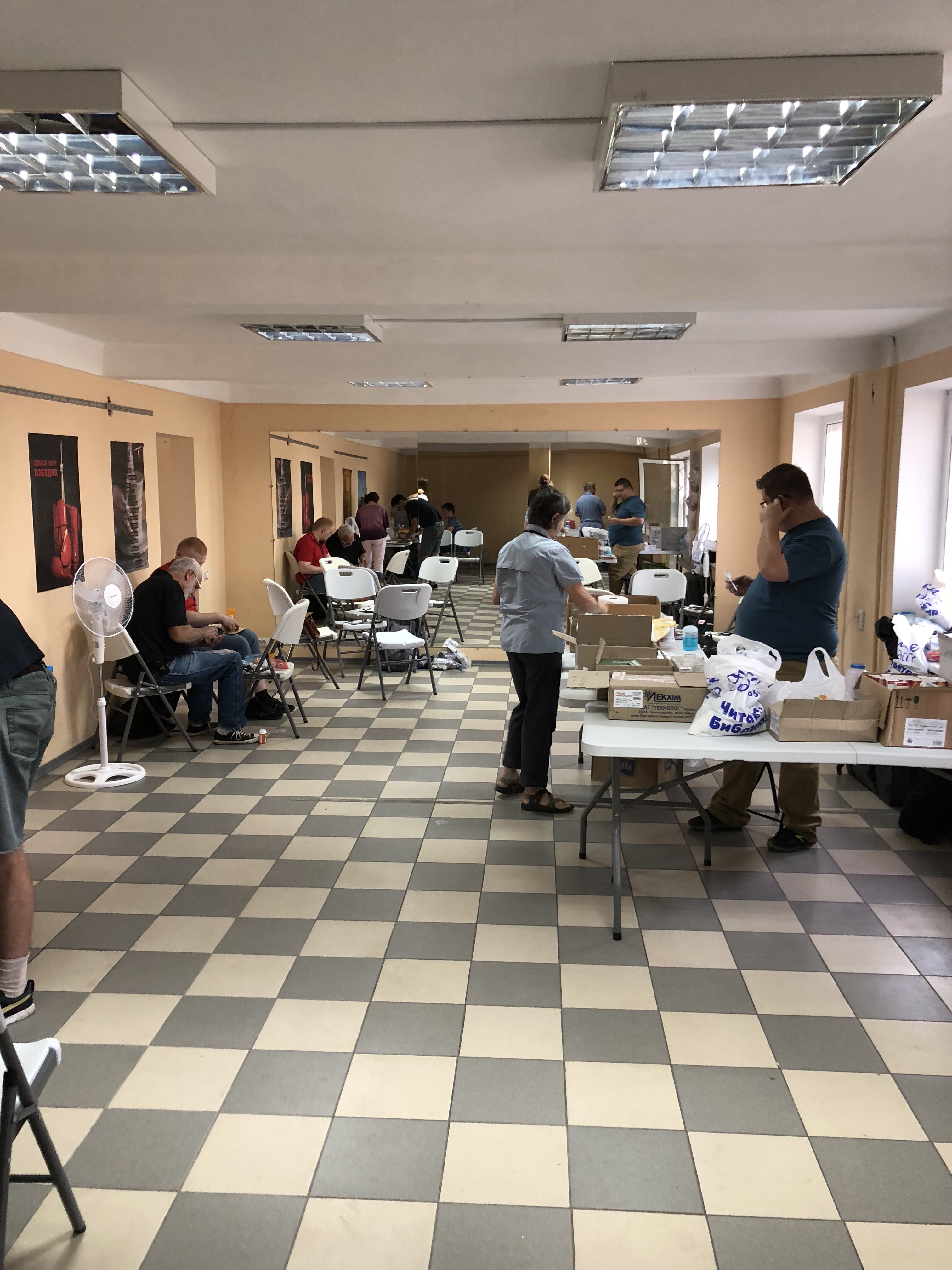
Today, we set up clinic in an apartment building on the first floor in a small room. Another doctor, a nurse practitioner, and I set up with our interpreters as well as our pharmacy and optometry student. The optometry student (Anya) saw almost every patient, doing cursory eye exams with a chart and dispensing the glasses we had as well as handing out the reading glasses we brought. She was the most popular and probably provided the most immediate gratification to patients. Many people came just because they could not read anymore. Through donations of reading glasses (and many prescription pairs as well), we were able to offer help that many of us take for granted. There were some fashion-conscious patients who wanted more options in frames, but nevertheless were happy with improved vision.
We were able to see more than twice the number of patients we can see at home, mostly because we were not spending our time with computer documentation. Here, the idea of “quality health care” means “I can sleep better tonight and have my medications for the next month”. We were able to give many medications out in supplies that help people in making ends meet. In Ukraine, the average retirement pension is around 1400 hryvnia, which is about $50 in US currency. Given an electric bill of $10, a winter heating bill of $150-200, food, and rent, the choices are often very simple…eat or buy medications. Through generous donations and forethought of prior medical teams, many meds were available or brought with us. A $4 med at a local pharmacy means nothing to us, but could mean several meals for a displaced Ukrainian.

Mostly, we saw patients with hypertension, diabetes, and arthritis, but also quite a bit of suffering from losses and displacement associated with the war. We saw more children today and also more anxiety and depression. We are all heartbroken with the stories of displacement from the war-torn areas. The apartment buildings are packed with people from all over, many who have not seen family members in over a year. Also, the lack of social resources is significant. Grief counseling, support for mental health disorders, and specialty care are lacking. Kiev is the nearest location for psychiatry, neurology, and other specialty resources and is about eight hours if all goes well. Many times, that is not practical from either a time or economic standpoint.
As before, the people we have met for the most part are very appreciative of the chance they get to have someone available to listen, even if the resources for response are limited. Most are happy to be given a small bag or Tylenol or ibuprofen, or even vitamins or a toothbrush. They are responding to the simplest effort to show them that someone cares. I hope to continue reaching out with compassion and a ear that listens, even if I don’t understand the spoken language. The smiles and hugs we receive are not language-dependent.


God bless your mission.
LikeLike