Category Archives: Ukraine

Reflections on Retirement’s First Six Months

Six months of retirement has taught me a few things. I had wondered how I would fill my time. I had an inkling that things would start out with a bang and that I would be busy trying to do everything I had on my mental “must-do” list for retirement. However, I quickly realized that while I had plenty to do, I don’t HAVE to do what I don’t want. I found freedom in rearranging my priorities to the things that are most important. I have been able to budget my time in an effort to rebalance my activities. In doing so, I have become more productive and fulfilled than I ever imagined.

I have always been a tinkerer. I like to try to fix things when I have time but pretty much stayed in my lane, never getting into the areas where one screw-up could lead to a costly repair. Plumbing projects gone awry can cause water damage and with electrical projects the fear of getting shocked has deterred me from even the smallest repair job. Calling on someone with experience has been easier.
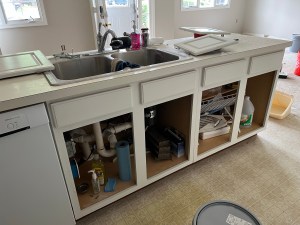
Now, though, I have become more adventurous in household projects that I will take on. I have moved out into both plumbing and electrical fields, having replaced bathroom faucet sets and thermostats as well as light fixtures. So far we have not had any water leaks or house fires. This is a direct result of having more time and not trying to rush through a project. And the more I do the more confidence I have. My wife has even had to make “executive decisions” and call professionals when I begin to ponder if I’m over my head.

Several years ago I decided to take on a shower cartridge assembly project that sounded simple enough. I read several articles on the internet and watch two or three YouTube videos on the correct steps to follow. After ordering parts directly from the company and following the recommended procedures, I found myself stuck at the point I could not finish. Finally, after calling a plumber, he came and used a few “tricks of the trade” to complete my project. Later on, he stopped by the office to tell me to stay away from plumbing since I took what should have been a 30-minute job and turned it into four hours for him. Now I take more time and prepare so I can complete more projects (or at least avoid the ones that are too complicated).

I have also tried to be more focused on taking care of myself. Without a set schedule it is easy to fall into the “I’ll do it sometime today” mentality. For me that leads to postponing activity (meaning I’ll probably skip it) and eating whatever is easy. Purposeful nutritional discipline with activity and sleep plans have become more of a must.

My mother has frequently talked about her “retirement” naps- the 15-30 minute eye closings that seem to regenerate her every afternoon. My naps have always been more like marathons, lasting 2-3 hours. I am trying to reserve mid-afternoons for nap time and limit them, but that has been a tough sell to my body. For some reason, I still wake up early and go to bed early. Attempts to reset my circadian rhythm to match that of my wife have not been successful. Early coffee and reading time leads to an early bedtime even when the nap is thrown in.
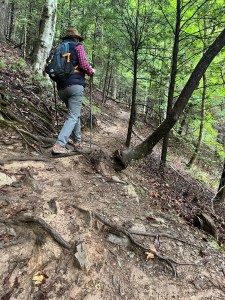
Exercise has been important with some adjustments in both intensity and frequency. Aging has painfully shown me that making attempts at high-intensity activities five days a week are no longer realistic. Now, I need to be content with any activity daily. With travel and changes in accessibility the 6 am CrossFit classes have been replaced by Peloton classes supplemented by walking. The part I’m missing is the need to cut back on food intake to offset my decreased caloric output.

Splitting time between home and grandchildren made us look closely at social interactions outside of work and family. We are extremely blessed to have a core group of friends that have been close for 20-25 years. This group of people is invaluable to us and spending time with any or all of them has given us a much needed periodic recharge. Compressing the time at home has made scheduling and intentional time with them a necessity. It has also made our social time a priority. One of our good friends used to say “last minute friends are best”, referring to our ability to send out a call to get together without planning just to spend time together. We still rely on that ability to send out a last-minute call on a Friday evening to pull a group together.
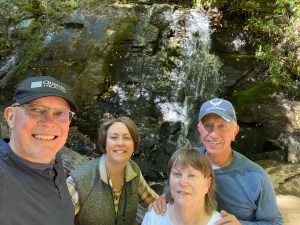
But probably the most glaring thing I have learned from retirement is that time seems to fly by. We’ve all heard that a million times. My list of things to do in retirement is getting larger, not smaller. I was told by an advisor several years ago that picking the time for retirement required that you look at three things- your money, your time, and your health. I thought I would worry more about the money first, then the health, and then time. I’m finding that time passes so quickly that I don’t know when I will be able to do all that I want to do.

Reading, walking, talking with friends, and spending time with the grandchildren are all available options, but the currency for them is time. Unlike money and health, investing in time when you are younger does not bring any increase to your account. Intentional time with friends and family require planning and coordination, though when retired the schedule is opened up. But not everyone else’s time is as open. Having back-up plans to fill gaps in days and evenings has made my experience much more enjoyable.

Hopefully, this is just the beginning. Having an open schedule brings freedom but that freedom requires some intentional planning to be sure I am doing the things that are important to me. Faith, family, friends, and health have always been my stated priorities. It’s just that now I’m able to line up my actions with my words.


Retiring from Practice

Well, the time has come. After almost twenty-eight years of caring for patients in our community, Gena and I are retiring from Corydon Family Care – BHMG on April 30, 2022.   Recent health issues and long distance grandparenting have led us to a decision to switch to roles that allow more flexibility in our schedules. This decision was not made lightly, but with much prayer and deliberation. 

Lori Shea Green, APRN will continue her practice at Corydon Family Care. Baptist Health Medical Group is currently recruiting providers to join Lori in the practice, however this may take some time and may not be for several months after our exit from the practice. If you are one of our patients, you will be receiving a letter with details about the transition in the next few weeks. 

During the time spent caring for the people of this community, many of you have become like family to us and we will miss seeing you in the office.  We will still be seeing patients and will be available in the office until April 30th. Your health and well-being are important to us and we thank you for entrusting us with your care.  We apologize for the inconvenience and appreciate your understanding. 

The Last Ride

Bella was special. She was a rescue dog, brought home by our teenaged daughter and my sister-in-law thirteen years ago after she was found at a traffic light. She was thin, dirty, and a little skittish, not sure who to trust. A visit to the vet helped us confirm that she had probably been treated roughly in her estimated two-year lifetime. But once we saw her, she became a family project.

A mostly lab mixed-breed with the long, soft hair of a golden retriever, she was such a sweet dog. With her wonderful disposition toward our family and household guests, she quickly acclimated to our home. Initially, she was to be my responsibility and I would use her care to help teach our children the importance of routine and consistency. She would need scheduled feedings, set times for “potty breaks”, and routine attention.

In a very short time, she became attached to all of us. Her quiet, loving demeanor would turn quickly when she perceived a threat to us or our property. She was the epitome of the “bark worse than bite” phrase, sounding the alarm with approaching strangers until they reached out a hand to pet her. Then she would melt in their hands, nuzzling and licking then if they showed her any attention.

Over the thirteen plus years that we had her, she grew with us. As the kids left for college, she took on the role of RV traveling companion. She preferred riding in the front passenger seat, but would settle for a perch on the dashboard for short trips watching the road everywhere we went. When we would set up at a campsite, she would sleep next to our chairs while we cooked outside or walked the campgrounds. When we would leave on a daily excursion, she settled into her spot on the dash so she could keep and eye on the comings and goings of the campsite. One time she even used her nose to open a window and jump to the ground and patrol the site waiting for our return.

As she (we) grew older, she had a much more difficult time getting around. Her ability to jump in and out the car declined as we added a ramp to allow an easier option. She progressed to the point that we would have to lift her to put her in the car. Also, her hearing disappeared and she developed glaucoma, leading to blindness in one eye. All the while, she was playful, loving, and faithful. As we watched her develop difficulty in walking and even getting down a single step to go outside, we knew the day was coming. We have read that dogs give you many of the best days of your life and one of the worst. That day came quicker than we wanted.

With my wife out of town visiting our grandson (and his family), Bella had a seizure. She came out of it but had a really slow recovery. She was having more difficulty walking and could barely get to her food bowl. The time was here.

After talking to our veterinary office, I lifted her into the back of my car and began the twenty-minute drive. In the back of the car she lifted up and watched me drive most of the trip, occasionally looking at passing cars along the way. When we arrived at the office, I had to wait for a few minutes before they could take her in. I sat in the back seat and she nuzzled up against me. When they called and we went inside (I had to carry her in) the loving and caring staff took us to a room where I could pet her and say goodbye. And I did.

The ride home was more difficult than I expected. Driving while trying to see through tear-soaked eyes was not a smart decision. But I couldn’t stop the tears no matter how much I thought the timing was right. She had a good life and keeping her around with her pain, deafness, and near-blindness was selfish of me. She is better now. But the last ride was tough.

A Sincere “Thank You” from the Heart

What a week! It has been a whirlwind, to say the least. As in my previous post, I have little recollection of the first part of the week, but since Wednesday afternoon, many things are pretty clear. The clear parts include (1) we have a merciful, gracious God who intervenes daily in our lives and (2) many times those interventions are through friends, family, and connections He has given us for support. I am immeasurably blessed with support and thankful for the prayers and concern offered to me and my family.

I do not remember any “out of body” experience (though my heart stopped several times). I do not remember conversations with medical staff that occurred, though I know they did. Since Gena was not allowed to be with me for any of the time (communication was through her cell phone only), I am thankful for the technology we have for that communication. I am also thankful for the timing and personnel who responded and got me to the care I needed.

I am thankful for the technology we have for correcting these types of problems. Working with patients on a daily basis, I think I may get a little calloused to the personal side of things. Some of the experiences our patients have are similar to what I had. I hope to never trivialize your experiences. The events can be scary, even when you know what’s happening (maybe they are scary BECAUSE you know what’s happening). Either way…my eyes have new perspectives.

I would like to thank everyone for the thoughts and prayers that have been offered for me and my family. I am thankful for the encouragement, offers of meals and help with errands. I am thankful for the recognition of fragility of our lives. While I have not responded to all messages, please realize that I have read every one. I have read the texts, Facebook, Twitter, and Instagram messages, messages from WordPress, phone messages, and, yes, the handwritten notes. I love you all, and am SO thankful for your place in my life.

Most of all, I am thankful for the blessings of a sovereign God. I realize those blessings are many and are to be used for His glory. I pray that I am able to remember that and look for better ways to serve Him.

Thirty Seconds is a Lifetime

Thirty seconds. It doesn’t seem like much. But when your heart, which usually beats one to one-and-a-half time a second, decides to take a break and beat once every thirty seconds a lot of things can happen. For me, the cascade of events over a two-day period prompted the insertion of a pacemaker to be sure my heart knows when it is supposed to beat. I have almost no recollection of the events of the two days described below. I am relying on what I was told by family, nursing staff, cardiologists, and neurologists. After thirty years of patient care, being a patient gives a whole new perspective. And I’m not convinced it’s a good one.

It all started near the end of the third quarter of the Super Bowl. We were in Maryland visiting our grandson and his parents and had an early flight Monday morning. I really didn’t care about the game, so I went to bed at the end of the third quarter. Gena came to bed a little later and things were pretty much as normal until about 2:30 am. Evidently, I awakened my light-sleeping wife with rhythmic jerking of my arms and legs. She tried to wake me up but I did not respond. She thought I was having a seizure. She jumped up, had my daughter call 911, awakened her parents and dragged me off the bed onto the floor. I was not breathing (or barely breathing), but had a pulse that was rapid and regular. EMS arrived, they put in an IV, started oxygen, and took me to Calvert Health Medical Center in Prince Frederick, Maryland.

In the emergency department, they thought I had some type of seizure. Blood work was normal and so was a CT scan of my head. They decided to put me upstairs on a monitored floor and have a neurologist see me later in the day. I had a video neurology consult pretty soon after that and an MRI of the brain and EEG were ordered. The MRI was normal, but during the EEG, my heart stopped for thirty seconds, TWICE! All of a sudden, they were not worried about seizures and more worried about my heart. While the tech was administering the EEG, I felt a little sweaty, nauseated, and put my head back to rest. The next thing I knew, they had called a “Stat Team,” the equivalent of what we used to call “Code Blue.” I awakened to a room full of emergency personnel and external pacemaker paddles on my chest. My heart restarted on its own, so nothing else was done except a transfer was arranged to Washington Hospital in downtown DC where I could be further evaluated.

After the transfer process (by ambulance) I was tucked in to my room. I had a couple of cardiologists stop by to discuss what had happened and what they thought. They decided that with the witnessed cardiac arrest a pacemaker would have to be placed and I was put on the schedule for later in the day. During the interim, I had several episodes of twenty-second stoppages, some with me slumping over in bed. Another “Stat Team” was called and they took me straight to the electrophysiology lab for pacemaker insertion. After that, I went back to my room with discharge later in the day. 

People who have “near-death” experiences frequently speak of lights, or memories flashing before their eyes. I had none of that. I remember feeling sweaty and nauseated. Then I remember coming to. No “Go towards the light” moment. Hopefully, this will fix the problem.

I am thankful for family and friends and all of the prayers. I am thankful for the first responders, the medical personnel at the community hospital, and also the expertise and specialty knowledge of the tertiary care center. Having little remembrance of the events, I am thankful for family support and understanding. SO, thirty seconds can be a very long time. 

Thankful for Technology

Sitting at my desk at work, caught up for the moment from messaging patients, I found the opportunity to take a breath and reflect on everything going on around us. As the COVID-19 pandemic continues to spread, we are following the recommendations that only patients with urgent or emergent problems be seen in our offices. This generates a significant number of phone and electronic communications, but also limits what we can do for patients when we are in physical contact with them. Not being able to perform a physical exam of some type runs counter to my training.

In medical school, we were taught that 40% of the time you can diagnose a patient by history alone, but another 40% require a physical exam. The remaining patients are either diagnosed by testing or go undiagnosed. In truth, over time that has evolved to 40% history, 20% physical, and the remainder by testing. When you are talking to someone and watching them on a camera, you can see some things, but the perspective is flattened and lighting difficult. Sometimes, you just have to run your hands across that rash, or feel how soft or firm that lymph node is. Trying to diagnose any ear problem, throat problem, or abdominal pain is definitely challenging.

But these are challenging times. What had become our standard of care in evaluation and management of patients is now evolving. We are re-evaluating our opportunities to perform what is best and trading it for what is best right now. Medical professionals are masters of determining risk-benefit ratios and treating patients based on those assessments. None of us were quite ready for a viral pandemic that limits our ability to evaluate. The oath to “first do no harm” takes on a different slant when asking a high-risk patient to do something as simple as get blood work done at the lab. The patient is now at risk simply from traveling to and from a healthcare facility. Previously, when starting a patient on a medication that has a slight chance of causing damage to their kidneys, I would want to know exactly what the kidney function was and then I would decide if it was worth the risk. Now, I also have to decide is it worth the risk of getting the test in the first place. We have moved into a different realm of “educated guesses”.

Today, having converted most of today’s patients from in-person office visits to video visits, I take a moment to sit back and wonder where we would be without our current technology. While we have all to some degree or another chastised our obsessions with smart phones, without the capability for messaging, we would be forced to bring our most vulnerable patients out into the world for possible exposure to hostile pathogens. What did we do before we had this level of technology?

I remember when our children were small, my in-laws lived in Texas (we are in Indiana) and my parents were in Tennessee. We tried some new technology (for the mid-1990’s) that included a video camera, a computer running a 486 processor, and a dial-up internet connection. We talked over each other and watched the fragmented video blips much like when we watched the moon landing in the 1960’s. Oh, how far we’ve come. Now, with FaceTime and Nixplay, parents, grandparents, great-grandparents and children can all get on the same call and interact visually as well as audibly. Hearing those first coos of your first grandchild are amazing and even better when you can be there virtually.

Now that everyone has an iPhone or an Android, using FaceTime, Facebook Messenger, Skype, Google Hangouts, or Zoom connects us in ways we never dreamed possible. We all connect in (almost) real time, watching our family and friends as we chat with them. We use the technology to stay in touch and can see facial expressions as they respond to our discussions and even our worst “dad” jokes. We can isolate, yet still be connected. We can put together the senses of sound and sight.

While I am always thankful for the my faith, family, friends, and freedom, I am especially thankful for our technology. Without it, I would need to take drastic steps- like, opening a book.

Sudden Experts

Opinions. Everyone has one. Everyone wants to offer their’s to the public. I am no exception. Everyone thinks they are an expert. The easy access we all have to information makes it easy to read summaries and gather information about any topic we want to research. and then, once we have read a little, we form our opinions and want to share those opinions with our “world”. What we forget, though, is that experience plays as great a role in understanding as knowledge.

I’ll never forget an experience I had while attempting what I thought was a basic plumbing repair. After watching several YouTube videos, ordering the appropriate parts, and assembling all of my tools for my “simple” shower cartridge replacement, I found myself unable to properly remove the old one. After struggling for several hours, I finally called a plumber I had know for several years who came the next day and fixed the shower. When he called me to tell me what he had done, he let me know that I had taken a 30-minute job (in the hands of someone with experience) and turned it into a four-hour job. All in an effort to save a little bit of money. Turns out, I didn’t save anything and the cost was actually quite a bit more than if I had called him in the first place. My quickly assembled “knowledge” of basic plumbing could not make up for his acquired experience and expertise of knowing the little tricks to make the job easier.

This is frequently represented in today’s social media posts in response to the current COVID-19 pandemic. Many of us read the “Cliff Notes” summary version of a topic and then like to think we are experts. We can become instant experts and very quickly share that “expertise” with large numbers of friends. And, heaven forbid, someone wants to disagree with my “expert” opinion. We’ve all seen it. A couple of quick responses, then everyone leaves the post, not wanting to get dragged into the fray. It is one thing to have an open, meaningful discussion, but an entirely different one to take stances based on incorrect or slanted information. I see far too many social media “discussions” that rapidly polarize and attract those who agree and deter those who don’t. We are all guilty of this.

We need to closely watch how this re-opening plays out and be careful to follow the recommendations. We don’t want to see a worsening spread that prompts a return to near-total shutdown. But we may well get that if we’re not careful. Keep in mind that numbers of infections and deaths that are less than predicted are a wonderful testimony to the fact that what we have done recently has worked. Let’s continue to listen and understand how we are protecting our society’s most vulnerable.

Pneumonia Vaccine and COVID-19

My response to a question regarding pneumonia vaccines to prevent pneumonia on COVID19 Pandemic

The pneumonia vaccine targets one particular bacteria that through history has been the cause of a common, deadly pneumonia – Streptococcus pneumonia. This particular bacteria should not be confused with the Group A Streptococcus that causes “Strept throat” or the Group B Streptococcus that causes pregnancy and newborn complications.

People with the same chronic conditons that increase the risk of death from COVID-19 are at risk for pneumonia from Streptococcal pneumoniae and are recommended to get the vaccine. Pneumonia in patients with COVID-19 is generally a viral pneumonia from SARS-COV2, so no vaccine exists. However, other co0infections do occur. When the immune system is busy fighting one infection, you have fewer resources to fight a second or third.

So to answer your question, patients with the chronic conditions that put them at risk should discuss getting the Pneumococcal vaccine with their healthcare provider.We try to offer it to all patients with diabetes, chronic lung disease, heart disease, chronic kidney disease, etc.

I am NOT retiring

At least not for several years. Many patients have made comments recently that they have heard that I am retiring from medical practice. While there are several things that have come together recently that have stimulated those rumors, I am not planning to retire until I am at least 65 years old.  That is at least seven years away (you can do the math). I would like to take this opportunity to explain the changes that are happening in our practice that might make our availability different from what it has been previously.

First, I have been named the Medical Director for Informatics for Baptist Health. This is a combination IT and quality administrative role that requires me to be out of the office to attend meetings a couple of days per week.

Another factor affecting our office is that Gena has returned to school in order to get her Doctorate in Nursing Practice. In order to attend school full-time, she has had to cut back to working part-time in the office. She should be finished with school in the Summer of 2019.

We have been happy to bring Lori Shea-Green, ARNP back to practice with us. She is also pursuing her DNP degree and working part-time in the office. Her schooling should be complete in the Fall of 2019.

So what does this mean? We have someone working in the office Monday through Friday, but it may take a little longer to get an appointment with a particular provider.

Here are some suggestions that might be helpful in making your appointment:

  1. Schedule your next follow-up appointment when you are leaving the office during your current appointment.
  2. Call well in advance for routine wellness visits, physicals, and routine follow-up appointments.
  3. For acute problems (sickness, injuries, etc.) call as soon as you can and we will do our best to get you in to see one of us as soon as possible.

We love our patients and the relationships that we have built over the years. Thank you for trusting us with your care and we hope to continue working with you all for many, many more years.

Who benefits the Most?

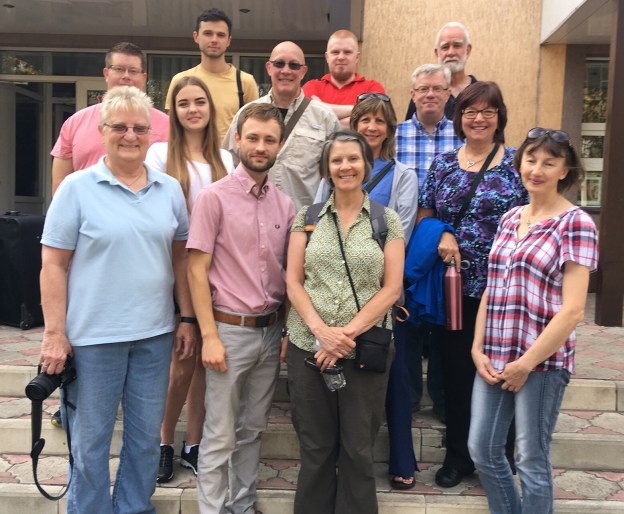
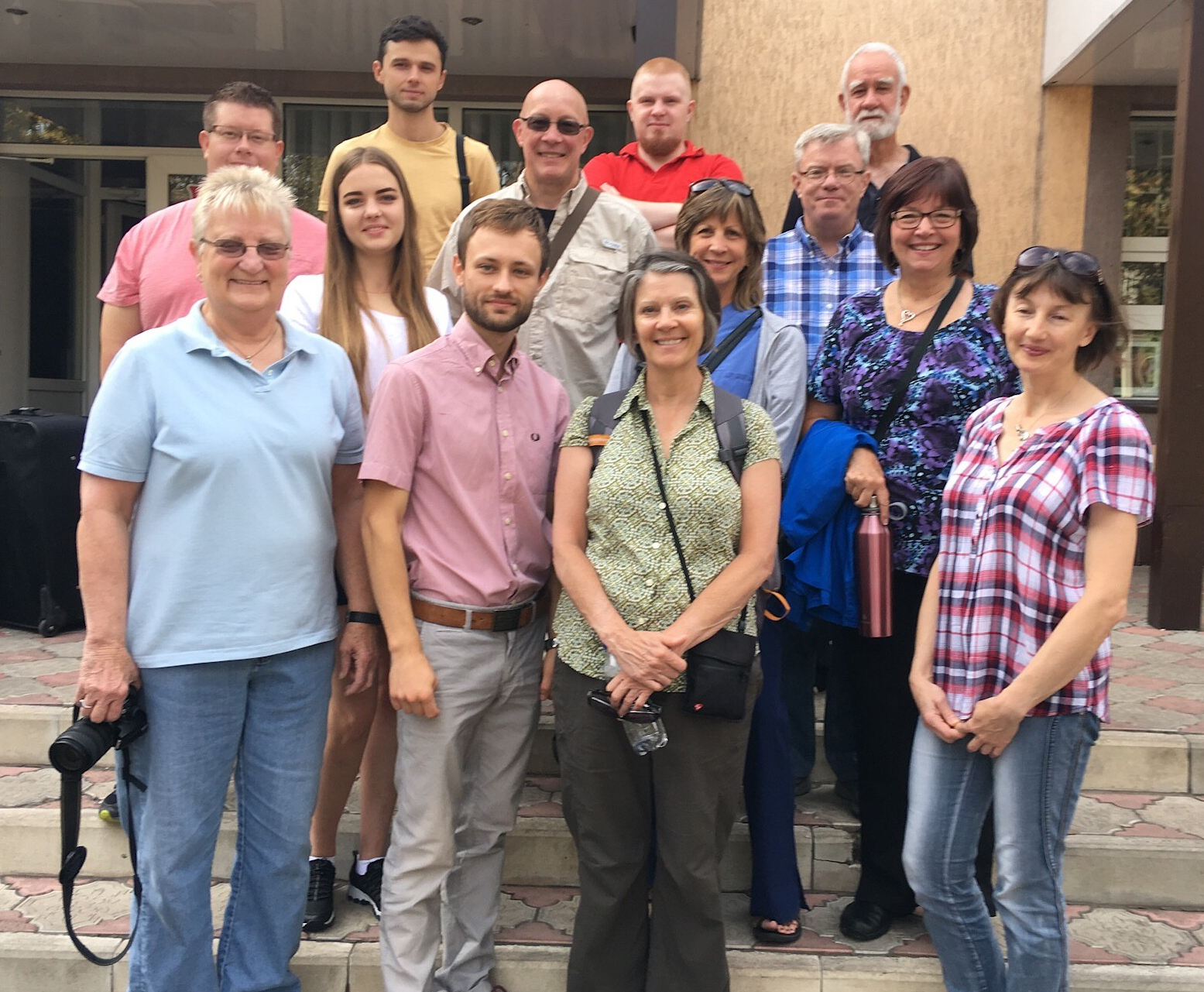
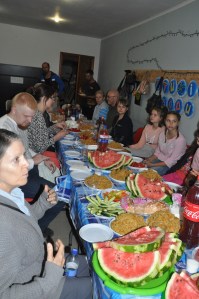
25c84dcb-a746-4b44-a4f8-055a600e1f69Having recently returned from a short-term medical mission trip to eastern Ukraine, my mind is racing in a hundred directions. I am still feeling the effects of the adrenaline surge that comes from the return to routine after a wonderful experience. I am aware that we live in a society of superlatives. “Top ten” this, “most amazing” that. Everything is one of the best or one of the worst from some arbitrary ranking scale. I don’t want to call this a “life-changing” experience. At least, not yet. Only time will tell of our travel and experience with villagers and Ukrainians changes my life. But I do wonder about who benefits the most.
img_1126

I know I have been impacted in a magnificent (there is another superlative) way. The chance to take something that I do every day and offer it to people in dire circumstances was a great opportunity. Someone else did the organizational work. Someone else took care of supplies and logistics. Someone else scheduled meals and travel. All I had to do was show up with my skillset and offer advice. And I also received praise from the villagers. Undeserved praise, at that. When they would offer “Thank you” and “Please come back” all I could do would be to convey to them that we would try. My psychological bank of purpose was filled up.

dsc_0567

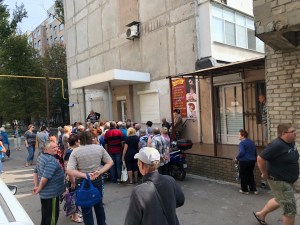
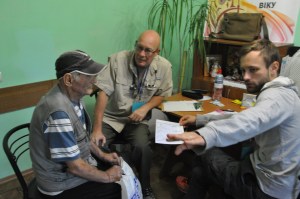
The villagers and townspeople received some benefit. The medications we gave them would allow them to divert the cost of those meds to other basic needs, such as paying for a few meals for the month or two while not having to spend money at the pharmacy. The advice we gave (hopefully) bolstered their opinion of their local doctors and medical teams. We made every attempt to convince them that the care they were receiving was good, they just needed to follow through with the treatment plans and see their local healthcare clinicians. But probably, the most important thing we did was listen. Even if for a few minutes, we were someone new who would listen to their stories.

img_0040In a setting where everyone has a horrible story of lost family, bombed homes, lack of money or other resources to procure daily necessities, no-one wants to hear another’s sad story. We were able to listen and let people tell us the details, engaging (if through interpreters) with the patients and, because we did not have to use computer screens to document the encounter, we could look them in the eyes. They seemed to lighten up just while telling their stories, no matter how horrific to us. It was old to them, but new to us. We would hang on every word. And everybody wants to be heard.
dsc_0720

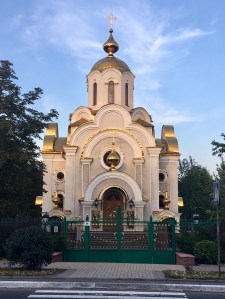
The local church members, pastors, and missionaries carried the load on this trip. They organized, set-up, and worked harder than we did. They speak the language and directed patients through our little mazes of clinic set-ups. They also were the ones who had to tell patients when we could not help them, were out of glasses, or simply could not get to them because of the line. They took the brunt of a crowd’s anger. They also are the one’s left with the difficult task of follow-up. We were able to make notes on our forms for people that needed pastoral or social follow-ups. The local pastors took these forms and will check in on these people from time to time, trying to make sure they continue the care and recommendations we gave them.img_4462-1

Hopefully, as we have all communicated with our local churches and friends back home, the awareness of the plight of these people will benefit those of you who have read about our adventure, prayed for us, and listened to our excitement as we tried to convey our experiences. I hope that through our testimonies and stories as well as plans for future trips, we can motivate people we touch to participate with us. I encourage anyone reading this to avoid glossing over that news article on the Russian-Ukrainian conflict because you don’t know much about it. If you know me, ask me. Get motivated to look beyond baseball and football scores, Facebook and Pinterest, and our country’s politics. There’s a whole world out there struggling and we can help. You don’t have to pick up and go there. You can simply be aware, read and research, and most importantly, pray!

The trip we made is nothing if it was not done for God’s glory and not ours. I would ask that you pray for three things. First, pray that in God’s time, the civil war end and the economy of eastern Ukraine be restored so that the people there can have resources for food, shelter, and the basics for survival. Secondly, pray for our in-country church members, their pastors, and missionaries that they may be strengthened and supported in their efforts. Thirdly, pray that good fruit will come from our trip, whether to the villagers, the travelers, or those who read about our adventure. Benefit comes in many forms. It is still too early to tell, but I would project that two to three years from now, I will say that I benefited the most.