Category Archives: Ukraine

Coming Home

Some people say that the hardest part of returning home from an enjoyable experience is leaving. Some say it is saying goodbye. Some say it is the pending return to routine. For me, the hardest part of returning home was the food poisoning. Awakened at 2:00 am by sweating, nausea, and abdominal cramping, I thought my sidewalk cafe meal in Vienna had caught up with me. I thought I was the only one ill and desparately wanted to make my flight. I did not want to lay over another day and scramble to get back to the U.S. It was not until I arrived in Washington that I discovered that others shared my misery.DSC_0719
Having food poisoning on a transcontinental flight makes you rearrange your ideas of where the best and worst seats are on a large airplane. Generally, I do not like to be seated next to the bathroom in the back of the plane. This flight, however, was different. I am thankful to have been seated at the very back, next to both the restroom, an empty seat,  AND and row mate who did not even acknowledge my presence. The empty seat allowed me  to store my carry-on in the center and gave me more leg room and just a bit more wiggle room to stretch and try to doze periodically. Also, the separation made me feel less guilty about the quiet sighs and moans I know I let out during the flight. Also, understanding and sympathetic flight attendants on Austrian Air who kept my Sprite and water bottles filled.

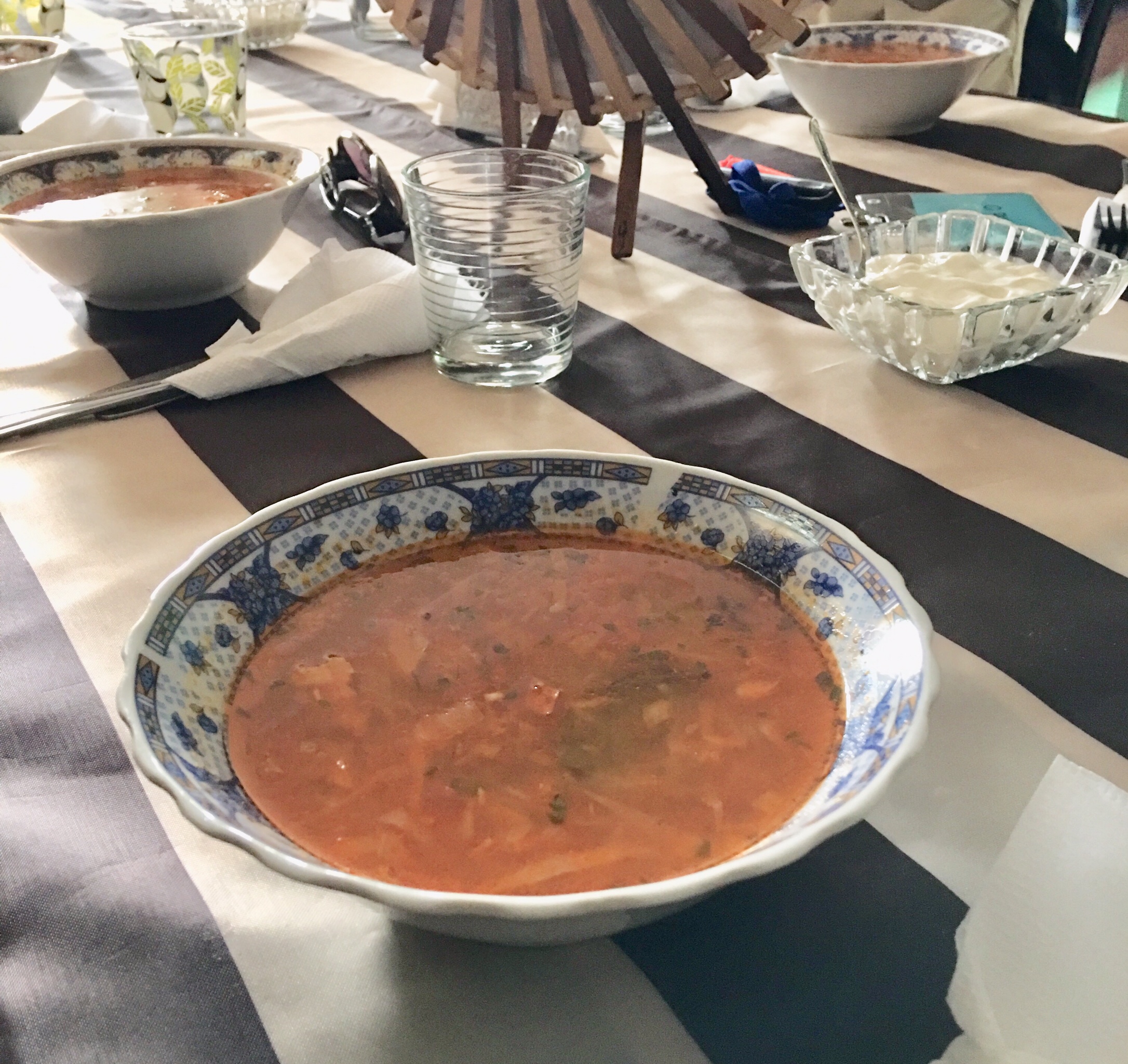
Only after landing did I receive notification that two other stateside team members, one in-country team missionary, and at least five local church members from our Friday meal were also ill with similar symptoms. It seems as though something we ate at our “traditional” Ukrainian send-off dinner did not like us. Since it hit over twenty-four hours later, I suspect it was not bacterial, but a heat-resistant toxin that was the culprit. Regardless, Two days later, it seems that everyone is on the mend. DSC_0688
All-in-all, this was the only bad mark on an extremely enjoyable and (hopefully) life-changing experience. The memories of the sweet people and their struggles, while fresh on my mind now, will fade some. I just hope that I can spread the awarenes of their plight and motivate others to want to help them. I am already planning my return trip.
Another Day in Novohrodivka

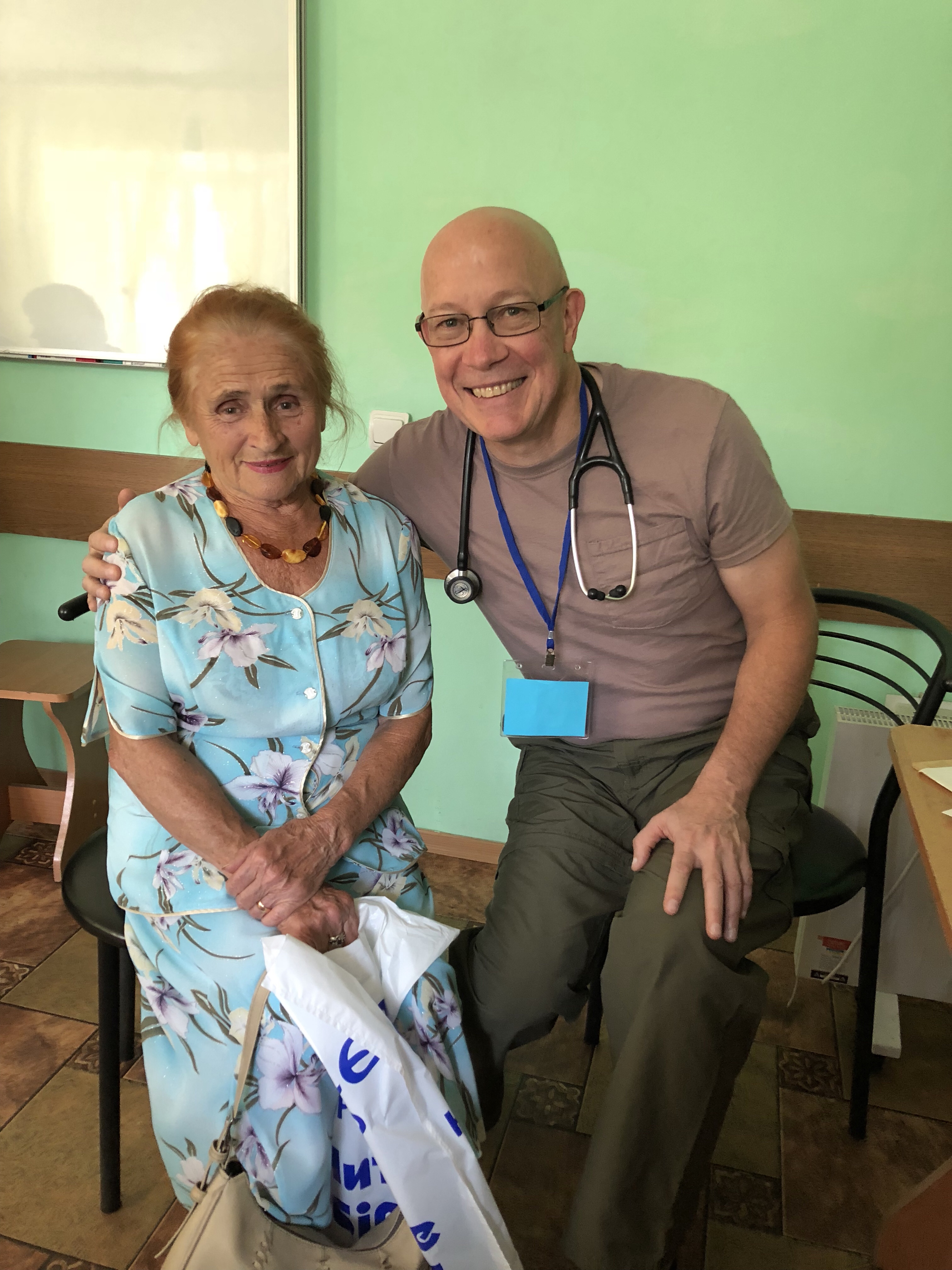
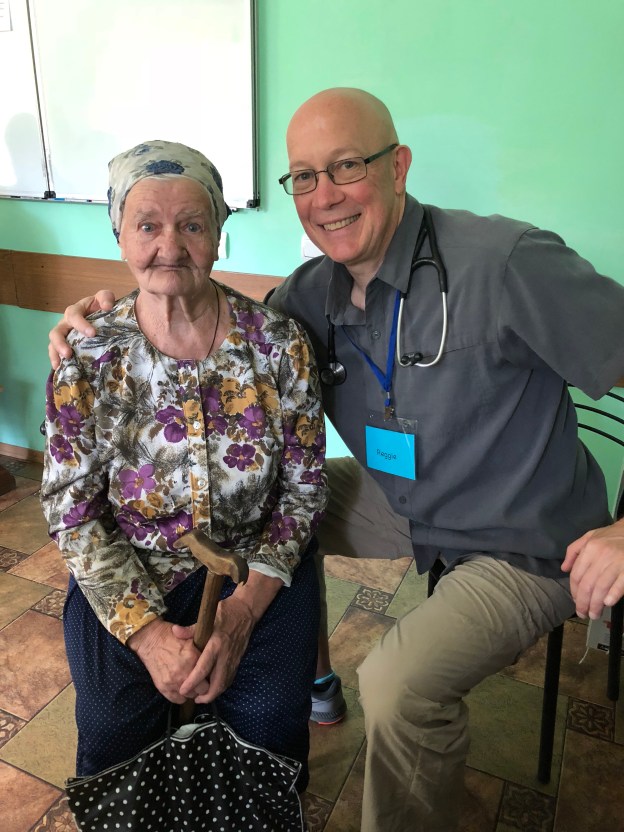
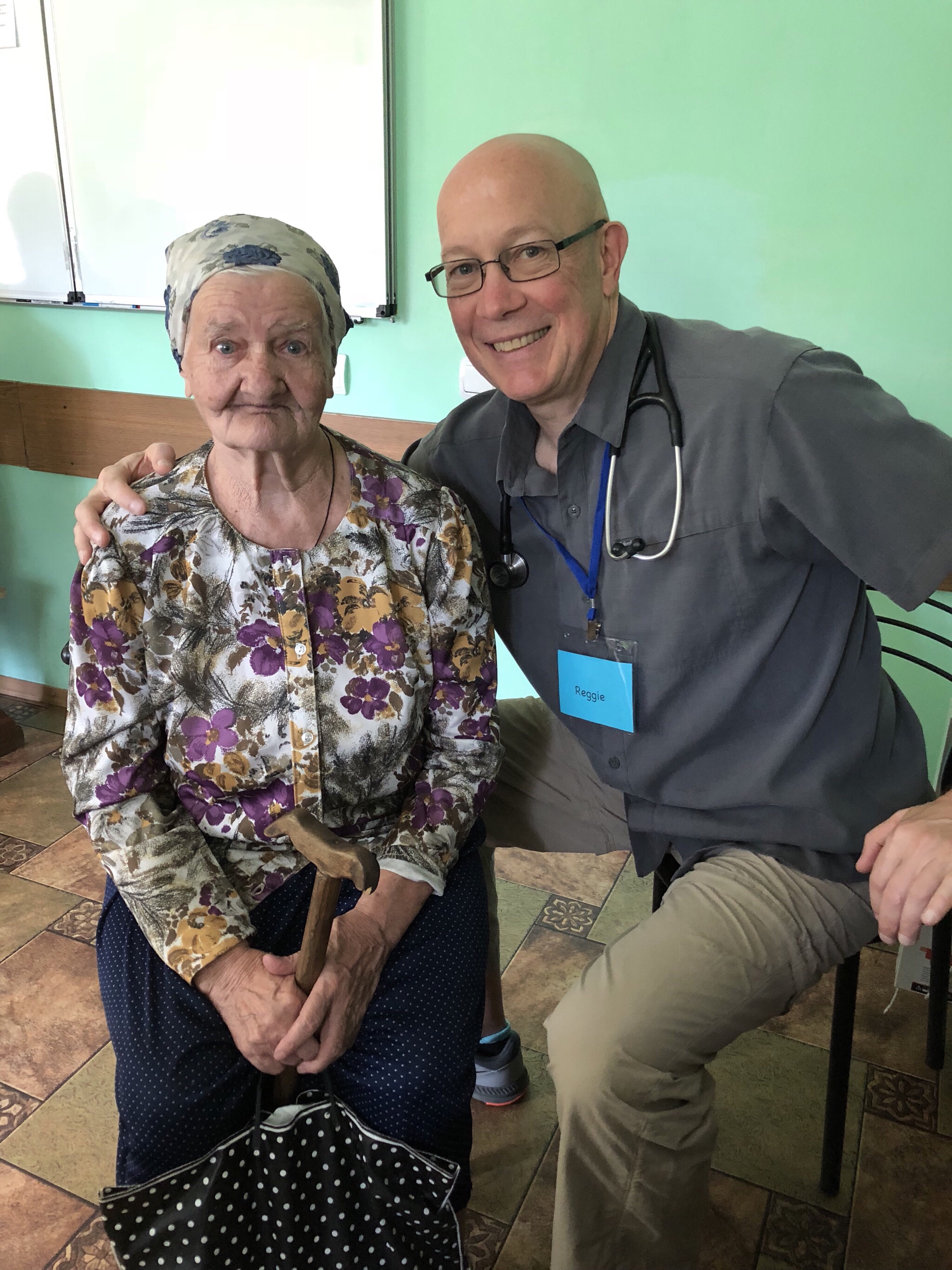
Our second day in Novohrodivka began with less fanfare than the day before. While we had a few people waiting for us, the chaos was much more controlled today. We quickly settled in to our routine, seeing patients and getting their eyes checked. One of my first patients was a lady who was alone with no one to care for her since her family had left. With a little prodding, she began to tear up, explaining that her children had left to go to “the other side”. They were separatists, siding with the Russian cause, and had moved across the border and she had not seen them in months. Her life now consisted of tending her small garden, walking to the store daily (after walking down two flights of stairs), and mostly living in isolation in the midst of a populated complex. I could not understand if the isolation was political due to her family actions, or just societal due to everyone’s busy struggle to survive. But her struggle was both internal and external.

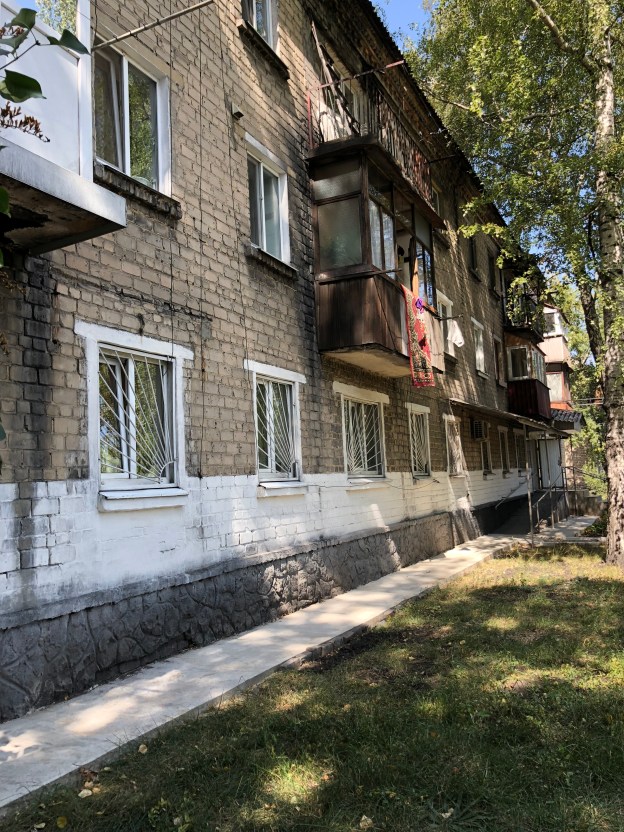
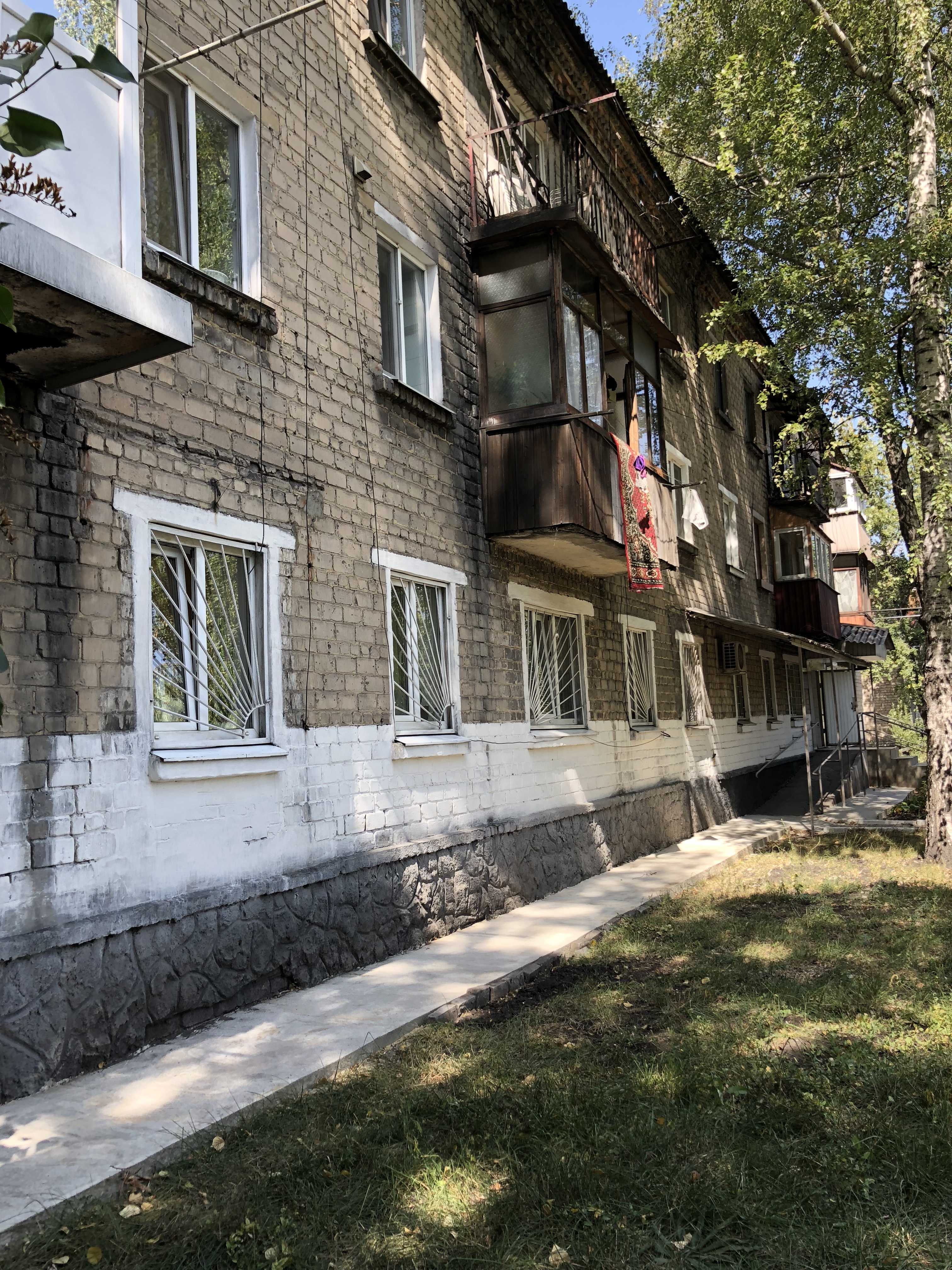
After lunch, I was asked if I would be interested in making a home visit. Having never seen the inside of a home in Ukraine, I agreed to go to a nearby home to visit a man who had been seen by a previous missions team, but was too ill to move from his home to the community center. Without going into the details of the visit, I was amazed at the lifestyle of many of the people we were seeing. It is hard to convey the setting of this small village, built on flat plains where you can see for miles in all directions. The only obstructions to view are one large hill (man-made by coal mine extraction) and numerous four-six story apartment buildings, clustered around courtyards. Had they been more modern in appearance, I would have thought there was a large university nearby and these were the dormotories. The population of this village is over 15,000 and most of them live in these buildings.

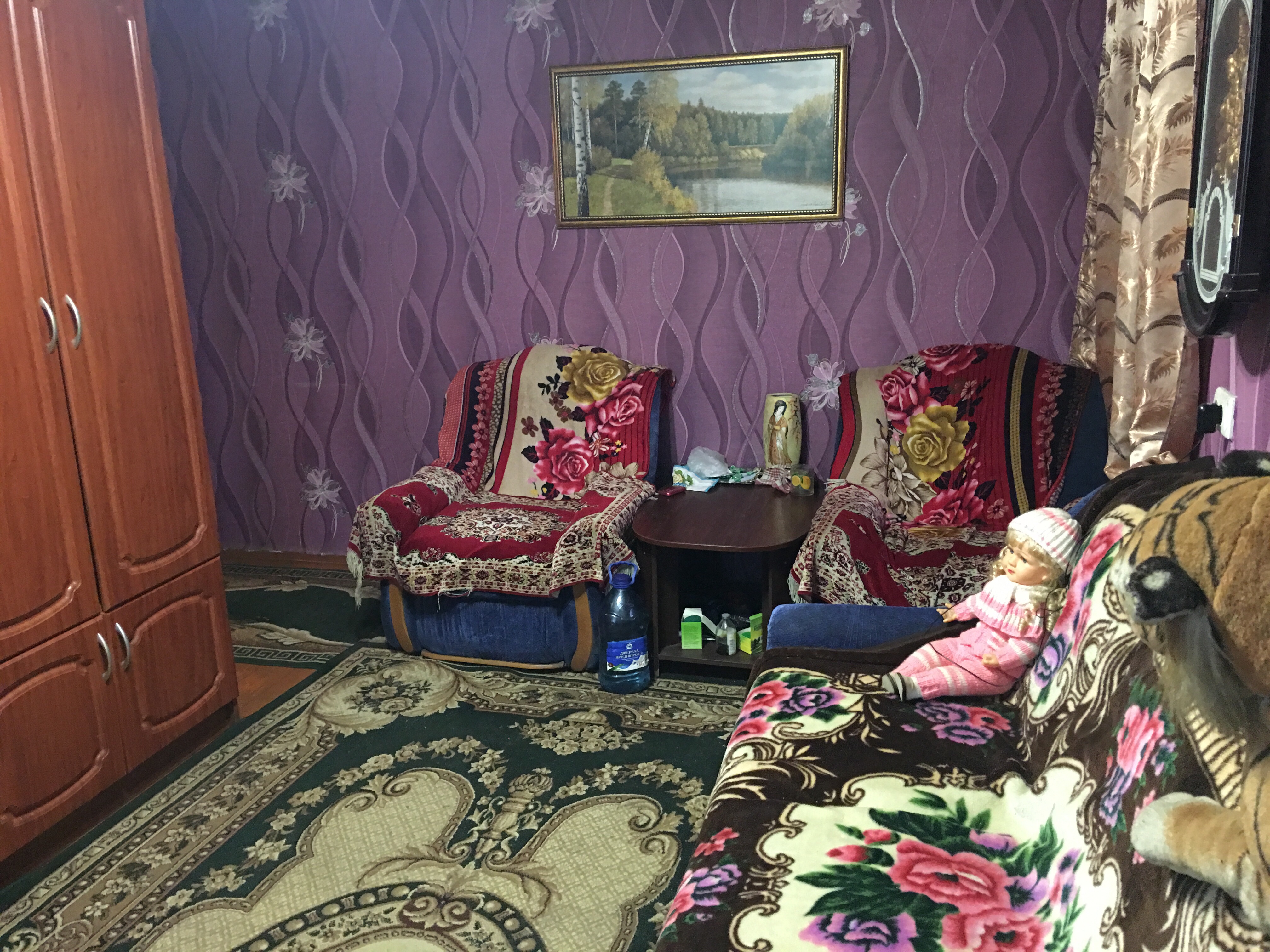
As I walked up to the back of one of these buildings, I thought we were walking into an inner city tenement. The dark, concrete stairs were much narrower than those at home. The plumbing and wiring resembled that of many homes built in the era of my grandparents, complete with exposed wiring, cast iron plumbing, and heavy coats of dark paint on everything. However, while I expected to see a trash-littered floor, the stairways was spotless. There was no dirt or dust, no odor, no excessive heat. In fact, the concrete stairways were quite cool with a breeze rushing through them. We took the stairs up a flight to the second floor and entered a very modern, locked door into the apartment of an elderly lady and her invalid son. The photo above shows their living room. It was approximately eight feet wide and sixteen feet in length. Off of that main room were two 8×10′ bedrooms with a tiny kitchen and bath making up the remainder of the living space. In total, there was less than 500 square feet. From conversations with others in the village, this seems to be the standard of living for those brought up during Soviet times. While there were again many stories of the day, one of my favorites was from an encounter with a feisty grandmother, full of energy, wanting to tell me everything about her life and family. With a long line of patients waiting in the hallway, after several minutes of listening to her loudly talk about her family and friends, we began to move her towards our pharmacy and eye exam station. As she began to walk away, she turned back to me and said, “When you see my son, tell him I said ‘Hello’.” I asked where her son was and she said “San Francisco.” She thinks that all Americans know each other and that I might run in to him some day. Tomorrow, we are scheduled to travel an hour and a half closer to the front to a another village with a different feel. This one has seen destruction from bombings and fighting. We will go through checkpoints and military zones. It is currently a safe area, but also considered a “grey” zone. I expect the stories from their to be mostly the same…but much different, also.

“Vsego Dobrogo”

22E47431-778C-4367-8608-ACADC5A176F7
B6E1DC3D-490B-4169-9B56-4C787F735D87

I have a hard time saying that. Not meaning, but literally saying it. In Russian, it is one of the ways to wish someone the best of health/luck as a way of saying goodbye. One interpreter told me it meant “go with God”.  Even though I studied Russian language in college, that was over thirty years ago and I had a sparse vocabulary at best. Now, in the midst of rapid fire words and phrases I don’t understand, I am trying to pick up on a few of the basics. Saying “Hello”, “How are you?”, “Thank you”, and “You’re welcome” are difficult enough. Today, at the prodding of my interpreter, I was trying to use a more common way of saying goodbye to a patient rather than the standard, formal “do svidania”.  I don’t think I did very well today, but I hope that by saying it over and over tonight in my hotel room, I will be better tomorrow.

Today is day four of our six days in the Donetsk Oblast of eastern Ukraine. (By the way, since becoming independent, it is not the Ukraine). We travelled forty-five minutes closer to the front to a town of Novohrodivka, a small town that has seen a destruction of economy, infrastructure, and population, though those who remain in the small homes and numerous apartment complexes are a strong-willed, passionate people. Again, stories of struggle to survive, communicate with family members, and remain safe and sheltered have become the priorities. These people have access to some local and regional primary caregivers, but again, medications are relatively expensive and basic testing, therapies, and surgeries must be done several miles away. With no way to travel, the community has a sense of isolation and despair.

ABE3C91D-28E1-4E49-9EA4-19664DF69291.jpeg

We arrived a little early at the community center to set up our traveling clinic and found a hallway full of women, mostly grandmothers, and mostly there to see us AND get their eyes checked. Evidently, some misinformation was sent through the community and many were under the impression that we were bringing a number of American specialists with equipment for testing and blood work. They brought medical records, blood tests, X-rays, CT’s, MRI’s, and EKG’s. The wanted opinions about what they had already been told. Many wanted us to give them “heart medicines” so they would not have a stroke. They are worried about their “blood vessels”. This is despite the fact that they have very high blood pressure and do not take their medications as they should. They came for “general check-ups”, pre-op evaluations, rheumatoid arthritis infusions, IV treatments for atrial fibrillation…all treatments we do not have. Neither do their local doctors. We tried hard to explain to them that they were getting the best care they could with what they have available.

Today, there were few patients’ problems that stood out like yesterday. Today, it was more of a struggle to hear the stories that were primarily social in nature. The majority of our patients were grandmothers over the age of seventy. We got the sense that they had lost their standing in the social structure and did not feel respected or needed. We saw very few men in the town. One of the ladies told us that gangs prowl the apartments at night to steal and use money to purchase drugs.  Most of them did not express fear of the gangs, but frustration that no one would help control them. Again, with industry, services, businesses and for the most part, government agencies, closing, there was not much hope that any changes would be coming soon.

With this, our job today became something different. While we did reassure and offer some advice to all of them, most of our time was spent in an attempt to convince them that the care they receive is appropriate, and that there are people in the world who care for them. The local church was involved and will follow through with many of the issues we uncovered. We were able to show them, as ambassadors for Christ, that though they are isolated, there are people all over the world who care for them and pray for them and their comfort.

While several of the ladies expressed a desire for us to return, one lady in particular told us “Come visit us more often. You are a nice people”. I think she was simply telling us that because we listened, their feelings of isolation, despair, and longing were validated. I hope that tomorrow, I can respond with “Vsego dobroho”.